DOI:http://doi.org/10.65613/741821
Xing Zhang1,a,Xu Liu2,b*
1School of Psychology, Jiangxi Normal University, Nanchang, 330022, Jiangxi, China
2School of Psychology,Jiangxi Normal University, Nanchang, 330022, Jiangxi, China
aEmail: ilfzf@126.com
bEmail: liuji-anping@jxnu.edu.cn
Abstract:Sleep disorders have become a prevalent global health burden, characterized by abnormal sleep architecture and irregular sleep-wake cycles, which are closely intertwined with circadian rhythm dysfunction. Circadian rhythm disturbance, as a core pathological feature of sleep disorders, not only disrupts basic physiological homeostasis but also acts as a critical predisposing and perpetuating factor for emotional dysregulation, ultimately leading to the high comorbidity of anxiety and depression. Anxiety-depression comorbidity further exacerbates circadian misalignment and sleep deterioration, forming a self-reinforcing vicious cycle that severely impairs physical and mental health and social functioning. This study systematically explores the psychophysiological mechanisms linking circadian rhythm disturbances to anxiety-depression comorbidity in sleep disorder populations, from the perspectives of molecular genetics, neuroendocrine regulation, neural circuit dysfunction, immune-inflammatory imbalance, and psychological cognitive processing. By sorting out the bidirectional causal relationship and intermediate pathways among the three core variables, this paper clarifies the hierarchical and interactive mechanisms of physiological abnormality and psychological dysregulation. Three quantitative comparative tables are constructed to summarize core index differences, mechanism pathway correlations, and comorbidity risk factors. The findings aim to provide a theoretical basis for the precise intervention and clinical treatment of sleep disorder-related emotional comorbidities, and offer new ideas for breaking the pathological cycle of circadian disturbance, sleep dysfunction, and emotional disorders.
Keywords: Sleep Disorders; Circadian Rhythm Disturbance; Anxiety-Depression Comorbidity; Psychophysiological Mechanism; Neural Regulation; Immune Homeostasis
1.1 Epidemic Status of Sleep Disorders and Emotional Comorbidities
With the acceleration of modern social rhythm and the diversification of lifestyle pressures, sleep disorders have evolved into one of the most common chronic health problems worldwide. Clinical epidemiological data show that more than 30% of the global population suffers from varying degrees of sleep dysfunction, including insomnia, sleep-wake phase disorder, irregular circadian sleep rhythm, and other subtypes, with a persistent upward trend in incidence year by year. Sleep is a basic physiological process essential for human physical recovery, neural repair, and emotional regulation[1-3]. Long-term abnormal sleep not only leads to daytime fatigue, cognitive decline, and physical dysfunction but also significantly increases the risk of mental and emotional disorders.
Anxiety and depression are the most prevalent emotional comorbidities in patients with sleep disorders. Different from single anxiety or single depression, anxiety-depression comorbidity presents more severe clinical symptoms, longer disease course, higher recurrence rate, and poorer treatment prognosis. Clinical statistics indicate that over 60% of chronic insomnia patients have varying degrees of mixed anxiety and depressive symptoms, and nearly half of the patients with severe sleep-wake rhythm disorders eventually develop clinically diagnosed anxiety-depression comorbid disorders[4-6]. Compared with patients with simple sleep disorders or single emotional disorders, comorbid patients show more significant circadian rhythm disorders, more disordered physiological indicators, and more impaired psychological coping functions, forming a complex pathological interaction system.
1.2 Core Role of Circadian Rhythm in Sleep-Emotion Interaction
Circadian rhythm is an endogenous 24-hour biological oscillation system formed by long-term biological evolution, which dominates the sleep-wake cycle, hormone secretion, neural activity, immune response, and cognitive emotional rhythm of the human body. The suprachiasmatic nucleus (SCN) of the hypothalamus is recognized as the core master clock of the human circadian system, which synchronizes peripheral tissue clocks through neural pathways and humoral regulation, maintaining the stability of the whole-body circadian homeostasis. Under normal physiological conditions, the circadian system coordinates with external environmental cues such as light and dark alternation, working and resting rules, to form a regular sleep-wake cycle and stable emotional diurnal variation[7].
Circadian rhythm disturbance is the key intermediate link connecting sleep disorders and anxiety-depression comorbidity. On the one hand, sleep disorders represented by insomnia and phase shift will directly disrupt the synchronization of the central circadian clock and peripheral clocks, leading to the disorder of core clock gene expression and abnormal rhythm of physiological indicators. On the other hand, circadian misalignment will further damage the neural circuits and endocrine pathways related to emotional regulation, reduce the body’s stress resistance and emotional regulation ability, and induce or aggravate anxiety and depressive symptoms. Existing studies have confirmed that circadian rhythm abnormality is not only a concomitant symptom of sleep and emotional disorders but also an independent risk factor for the occurrence and progression of comorbid diseases, which has a decisive impact on disease severity and prognosis[8-10].
1.3 Research Significance and Framework of This Study
At present, most existing studies focus on the simple correlation between sleep disorders and depression or sleep disorders and anxiety, while systematic elaboration on the psychophysiological mechanisms of circadian rhythm disorders participating in anxiety-depression comorbidity is insufficient. The interactive pathways of physiological regulation and psychological cognition in the comorbid process are still unclear, and there is a lack of standardized quantitative comparison of core pathological indicators. Based on the bidirectional interaction of sleep, circadian rhythm, and emotion, this study systematically analyzes the multi-dimensional psychophysiological mechanisms of circadian disturbance leading to anxiety-depression comorbidity in sleep disorder populations, sorts out the core pathways of genetic, neuroendocrine, neural circuit, immune, and psychological cognitive dysregulation, and constructs quantitative comparison tables of core indicators. The research results can make up for the deficiencies of existing theoretical research, provide targeted theoretical support for clinical precise intervention, and have important practical significance for improving the treatment effect of sleep and emotional comorbidities and reducing disease recurrence[11].
This study adopts a hierarchical and progressive research framework. First, it expounds the basic theoretical basis of circadian rhythm regulation and sleep-emotion interaction. Second, it analyzes the bidirectional causal relationship between circadian disturbance and anxiety-depression comorbidity. Third, it elaborates the core psychophysiological mechanisms from multiple dimensions. Fourth, it compares the differences of core indicators in different disease states through quantitative tables. Finally, it summarizes the pathological cycle and clinical enlightenment, realizing the organic combination of theoretical analysis and data verification.
2. Theoretical Basis of Circadian Rhythm Regulation and Sleep-Emotion Homeostasis
2.1 Composition and Regulatory Mechanism of Circadian Clock System
The human circadian clock system is composed of the central master clock and peripheral auxiliary clocks, forming a complete and hierarchical regulation network. The central master clock located in the hypothalamic SCN receives external light signal stimulation through the retinohypothalamic tract, converts environmental light-dark cues into endogenous biological signals, and realizes the synchronization of the whole-body circadian rhythm. Peripheral clocks are widely distributed in organs and tissues such as the brain, liver, heart, and immune cells, which are regulated by the central clock and independently participate in the rhythmic regulation of local physiological functions[12].
The molecular basis of circadian rhythm oscillation relies on the transcription-translation feedback loop of core clock genes, including CLOCK, ARNTL (BMAL1), PER1-3, CRY1-2, and NPAS2. Under normal physiological conditions, CLOCK and ARNTL proteins form heterodimers to promote the transcription of PER and CRY genes. The translated PER and CRY proteins accumulate in cells, form inhibitory complexes, and feed back to inhibit the activity of CLOCK-ARNTL dimers, thereby forming a 24-hour periodic oscillation loop. This stable gene oscillation rhythm maintains the normal operation of sleep-wake conversion, hormone rhythmic secretion, neural excitability regulation, and immune cell activity change.
When the circadian clock system is disturbed, the expression rhythm of core clock genes is disordered, the feedback loop is unbalanced, and the synchronization between the central clock and peripheral clocks is broken. This series of molecular abnormalities will trigger the overall dysfunction of the circadian system, leading to sleep cycle disorder, abnormal physiological rhythm, and subsequent emotional regulation dysfunction, which is the fundamental molecular basis for the occurrence of sleep-emotion comorbidities.
2.2 Physiological Correlation Between Circadian Rhythm and Sleep Homeostasis
Human sleep regulation follows the dual-process model jointly dominated by circadian rhythm and sleep homeostasis. The circadian rhythm system is responsible for controlling the timing and cycle of sleep-wake conversion, maintaining the regularity of sleep rhythm; the sleep homeostasis system is responsible for sensing sleep pressure, adjusting sleep depth and duration, and ensuring the adequacy of physical rest. The two systems coordinate and restrict each other to maintain the stability of sleep structure and quality.
Circadian rhythm stability is the prerequisite for normal sleep homeostasis. Regular circadian oscillation can accurately regulate the secretion rhythm of melatonin, cortisol, and other sleep-related hormones: melatonin secretion peaks at night to promote sleep initiation and maintain sleep stability, while cortisol secretion peaks in the morning to wake up the body and maintain daytime arousal. The orderly alternation of hormone rhythms ensures the normal conversion of sleep and wakefulness. When circadian rhythm is disturbed, melatonin secretion is delayed or reduced, cortisol rhythm is reversed, sleep pressure regulation is abnormal, resulting in insomnia, difficulty in falling asleep, shallow sleep, early awakening, and other sleep disorder symptoms.
Conversely, persistent sleep disorders will also reverse damage circadian rhythm homeostasis. Long-term insomnia, irregular sleep time, and insufficient sleep duration will disrupt the input of normal environmental cues, inhibit the normal oscillation of core clock genes, weaken the synchronization ability of the central clock, and further aggravate circadian misalignment. The mutual damage of circadian disturbance and sleep dysfunction forms the initial pathological basis for emotional comorbidities.
2.3 Psychological Connection Between Circadian Rhythm and Emotional Regulation
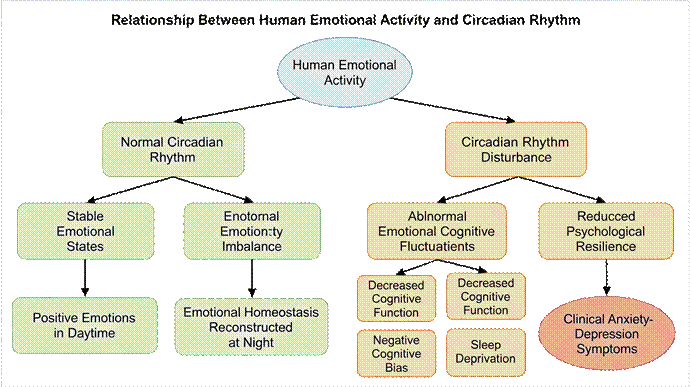
Human emotional activity has obvious circadian rhythmicity, and the stability of circadian rhythm directly affects the efficiency of psychological emotional regulation. Under normal circadian conditions, individuals maintain stable emotional states throughout the day: positive emotional experience is dominant in the daytime, emotional tension is relieved at night with sleep, and emotional homeostasis is reconstructed. Circadian rhythm disturbance will break the diurnal balance of emotional activity, leading to abnormal fluctuation of emotional state.
From the perspective of psychological cognition, circadian misalignment will affect individual cognitive function, including attention control, executive function, and emotional processing ability. Abnormal circadian rhythm leads to decreased daytime arousal, slow cognitive response, increased negative cognitive bias, and reduced ability to cope with environmental stress. Individuals are more sensitive to negative stimuli, prone to excessive worry, tension, and anxiety, and unable to effectively adjust negative emotions, eventually accumulating depressive mood. In addition, circadian disorder-induced sleep deprivation will further damage psychological resilience, reduce individual psychological adaptation ability, and accelerate the transformation from sub-health negative emotions to clinical anxiety-depression symptoms.
3.1 Circadian Disturbance Induces Anxiety-Depression Comorbidity
Circadian rhythm disturbance is an independent initiating factor of anxiety-depression comorbidity in sleep disorder patients. On the basis of sleep dysfunction, continuous circadian misalignment will trigger multi-system physiological and psychological abnormalities, and gradually induce mixed anxiety and depressive symptoms. In terms of physiological regulation, circadian disorder leads to HPA axis hyperactivity, abnormal sympathetic-adrenal medulla system excitation, increased inflammatory factor release, and imbalance of neurotransmitter secretion, which jointly build the physiological basis of emotional dysregulation.
In terms of psychological performance, patients with circadian rhythm disorders often present diurnal emotional differences: daytime fatigue, low mood, decreased interest, and night-time tension, irritability, excessive rumination. This abnormal emotional rhythm makes individuals in a long-term state of emotional tension and fatigue. Short-term circadian misalignment can cause transient anxiety and depressed mood, while long-term persistent circadian disturbance will lead to irreversible damage to emotional neural circuits, making negative emotions persistent and stable, eventually developing into clinical anxiety-depression comorbid disorders. Clinical longitudinal studies have confirmed that circadian rhythm abnormality precedes the occurrence of emotional comorbidities, and the severity of circadian disturbance is positively correlated with the degree of anxiety-depression symptoms.
3.2 Anxiety-Depression Comorbidity Aggravates Circadian-Sleep Dysfunction
Anxiety-depression comorbidity has a significant reverse aggravating effect on circadian rhythm and sleep function, forming a mutually reinforcing pathological cycle. Patients with comorbid disorders have persistent negative emotional states: anxiety symptoms lead to excessive psychological tension, increased physiological arousal, and difficulty in relaxing the body and mind at night, which inhibits melatonin secretion and delays sleep initiation; depressive symptoms cause low vitality, apathy, and abnormal sleep-wake motivation, leading to irregular sleep time and insufficient sleep quality.
Persistent negative emotions will further disrupt the oscillation rhythm of core circadian clock genes, weaken the regulatory function of the SCN central clock, and reduce the synchronization degree of peripheral circadian rhythms. The secondary circadian disturbance will further worsen sleep disorders, resulting in more serious insomnia, sleep phase shift, and sleep structure disorder. At the same time, the abnormal physiological activation caused by emotional disorders will maintain the body in a long-term stress state, inhibit the repair of sleep-related neural circuits, and make circadian disturbance and sleep dysfunction persistent and refractory. This bidirectional interactive mechanism makes the comorbid state difficult to self-recover and significantly increases the difficulty of clinical treatment.
3.3 Vicious Cycle of Circadian Disturbance, Sleep Dysfunction and Emotional Comorbidity
Based on the bidirectional correlation among the three variables, a closed-loop vicious cycle of “circadian disturbance – sleep dysfunction – anxiety-depression comorbidity – aggravated circadian disturbance” is formed. The initial circadian rhythm abnormality breaks sleep homeostasis, induces sleep quality decline and sleep structure disorder; persistent sleep disorders further expand circadian misalignment and trigger multi-dimensional physiological and psychological dysregulation; the resulting anxiety-depression comorbidity reversely inhibits circadian synchronization and sleep repair; the continuous deterioration of circadian and sleep function further aggravates emotional disorders, realizing the continuous iteration and escalation of pathological damage.
This pathological cycle is the core reason for the high recurrence and poor prognosis of sleep-emotion comorbidities. Different from single disease lesions, the three-factor interactive system involves multi-level abnormalities of gene, nerve, endocrine, immunity, and psychology, with strong stability and self-reinforcing characteristics. Only by clarifying the core psychophysiological mechanisms of the cycle can we find key intervention nodes and break the pathological progression process.
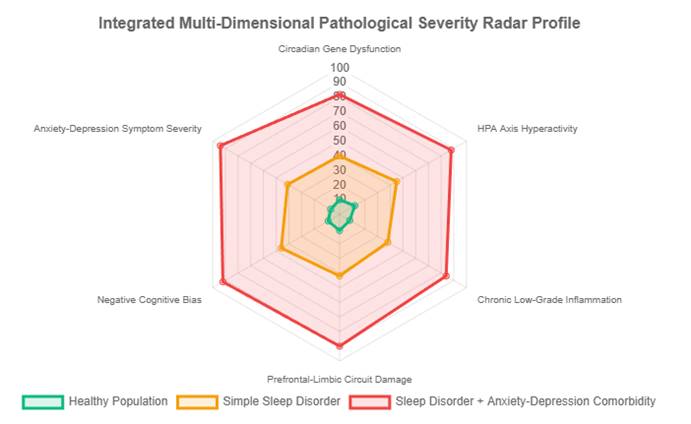
4.1 Genetic Molecular Mechanism: Imbalance of Core Circadian Clock Gene Oscillation
Core circadian clock gene dysfunction is the fundamental molecular mechanism connecting circadian disturbance, sleep disorders, and emotional comorbidities. Normal expression oscillation of CLOCK, ARNTL, PER, CRY, and other genes maintains the stability of circadian rhythm and sleep-emotion homeostasis. In sleep disorder populations, the mutation, polymorphism, and abnormal rhythmic expression of core clock genes will directly lead to circadian system dysfunction, and further induce emotional regulation disorders.
The abnormal expression of CLOCK and ARNTL genes will weaken the transcriptional regulation ability of circadian rhythm, resulting in delayed sleep phase, reduced sleep duration, and disordered sleep structure. The abnormal oscillation of PER and CRY genes will damage the negative feedback loop of circadian rhythm, leading to the loss of periodicity of physiological activities. These clock gene abnormalities not only cause sleep disorders but also affect the expression of downstream emotion-related genes, regulate the synthesis and metabolism of neurotransmitters such as serotonin and dopamine, and reduce the stability of emotional neural regulation. Clinical genetic studies have shown that the polymorphic variation of core clock genes is significantly associated with the susceptibility of anxiety-depression comorbidity in sleep disorder patients, and individuals with abnormal clock gene expression have a 2-3 times higher risk of comorbid emotional disorders than ordinary populations.
In addition, circadian clock gene dysfunction can interact with stress-related genes to enhance the body’s stress sensitivity. Long-term circadian misalignment will lead to persistent abnormal expression of clock genes, making the body in a chronic stress state, which provides a molecular basis for the occurrence of mixed anxiety and depressive symptoms.
4.2 Neuroendocrine Mechanism: HPA Axis and Melatonin Rhythm Disorder
Neuroendocrine rhythm disorder is the key intermediate physiological mechanism of circadian disturbance inducing anxiety-depression comorbidity. The hypothalamic-pituitary-adrenal (HPA) axis and melatonin secretion system are the most important circadian-dependent endocrine pathways, which jointly regulate body stress response and emotional state.
Under normal circadian conditions, the HPA axis presents a regular diurnal rhythm: cortisol secretion is low at night and peaks in the early morning, which adapts to the sleep-wake cycle. Circadian rhythm disturbance will lead to HPA axis hyperactivity and rhythm reversal, with increased night cortisol secretion and insufficient morning peak secretion. Persistent high-level cortisol will damage the hippocampal neural structure, reduce the volume of hippocampal neurons, inhibit the proliferation of new neurons, and damage the emotional regulation function of the limbic system. Excessive HPA axis activation will also increase body stress arousal, leading to persistent tension, worry, and anxiety symptoms; long-term hormone imbalance will cause low mood, anhedonia, and other depressive symptoms, forming mixed emotional disorders.
Melatonin is a key hormone regulating sleep initiation and circadian synchronization, and its secretion is strictly dependent on normal circadian rhythm. Circadian disturbance will lead to delayed melatonin secretion peak, reduced total secretion, and abnormal rhythm fluctuation, resulting in difficulty falling asleep, shallow sleep, and frequent awakening. Insufficient melatonin secretion not only worsens sleep disorders but also reduces its neuroprotective and emotional stabilizing effects. Melatonin can regulate the activity of emotional neural circuits, inhibit excessive sympathetic nerve excitation, and reduce negative emotional accumulation. The loss of this regulatory effect will significantly increase the risk of anxiety and depression comorbidity.
4.3 Neural Circuit Mechanism: Dysfunction of Sleep-Emotion Integration Network
The human brain has a complex neural network integrating sleep regulation and emotional processing, mainly including the SCN central circadian nucleus, limbic system, prefrontal cortex, and brainstem arousal system[13]. Circadian rhythm disturbance will damage the functional connection and signal transmission efficiency of this neural network, leading to the co-occurrence of sleep dysfunction and emotional dysregulation.
The prefrontal cortex is the core brain region for emotional control and cognitive regulation, which inhibits excessive activation of the limbic system and maintains emotional stability. Normal circadian rhythm ensures the normal metabolic activity and neural excitability of the prefrontal cortex. Circadian misalignment will reduce the neural activity of the prefrontal cortex, weaken its inhibitory control over negative emotions, and make individuals unable to effectively regulate anxious and depressive moods. The amygdala, as the core brain region for negative emotional processing, presents excessive activation under circadian disturbance, resulting in enhanced sensitivity to negative stimuli, increased emotional reactivity, and easy occurrence of anxiety, irritability, and depressed mood.
The hippocampus undertakes the functions of emotional memory consolidation and stress regulation. Circadian rhythm disorder-induced hormone imbalance and sleep deprivation will inhibit hippocampal neural activity, damage memory regulation function, and lead to persistent negative emotional memory accumulation. The functional connection disorder between the prefrontal cortex, amygdala, and hippocampus forms the core neural circuit mechanism of anxiety-depression comorbidity[14]. In addition, the brainstem monoamine neurotransmitter system is regulated by circadian rhythm. Circadian disturbance will reduce the synthesis and release of serotonin and dopamine, which are closely related to emotional stability and motivation, further aggravating mixed anxiety and depressive symptoms.
4.4 Immune-Inflammatory Mechanism: Chronic Low-Grade Inflammatory Activation
Circadian rhythm is an important regulatory factor of human immune function, and the activity of immune cells and the secretion of inflammatory factors have obvious circadian rhythmicity. Circadian disturbance will break immune homeostasis, induce chronic low-grade inflammatory activation, and participate in the occurrence of sleep disorders and anxiety-depression comorbidities.
Under normal circadian conditions, the secretion of pro-inflammatory factors such as TNF-α, IL-6, and IL-1β maintains a low rhythmic level, and anti-inflammatory factors balance the inflammatory response. Circadian misalignment will up-regulate the expression of nuclear factor-κB (NF-κB) signaling pathway, promote the massive synthesis and release of pro-inflammatory factors, and inhibit the activity of anti-inflammatory factors. Persistent low-grade inflammation will act on the central nervous system through the blood-brain barrier, induce neuroinflammatory responses, damage neural circuit function, and affect the synthesis and metabolism of neurotransmitters.
Central neuroinflammation can significantly disrupt sleep structure, reduce sleep quality, and aggravate circadian rhythm disorders. At the same time, inflammatory factors can activate the HPA axis, enhance body stress response, induce emotional dysregulation, and promote the occurrence of anxiety and depression. Clinical studies have confirmed that the levels of peripheral inflammatory factors in sleep disorder patients with anxiety-depression comorbidity are significantly higher than those in simple sleep disorder patients and healthy populations, proving that immune-inflammatory imbalance is an important intermediate mechanism of comorbid diseases.
4.5 Psychological Cognitive Mechanism: Negative Cognitive Bias and Coping Dysfunction
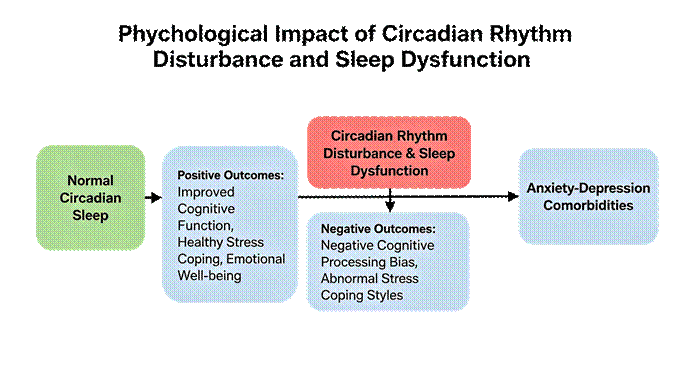
On the psychological level, circadian rhythm disturbance and sleep dysfunction will induce negative cognitive processing bias and abnormal stress coping styles, and further consolidate and aggravate anxiety-depression comorbidities. Normal circadian sleep can repair cognitive function, optimize emotional processing mode, and maintain positive cognitive coping ability. Long-term circadian misalignment and poor sleep will lead to cognitive fatigue, attention deficit, and executive function decline.
Patients with circadian sleep disorders show significant negative cognitive bias: they pay excessive attention to negative environmental information, amplify negative emotional experience, and have cognitive distortion such as catastrophic thinking and over-worry, which directly induce persistent anxiety symptoms. At the same time, decreased cognitive vitality and reduced behavioral motivation lead to negative cognition such as self-denial, hopelessness, and low self-efficacy, which promote the occurrence of depressive symptoms. The coexistence of negative attention bias and negative self-cognition forms the psychological basis of anxiety-depression mixed symptoms.
In terms of coping styles, circadian sleep dysfunction reduces individual psychological resilience and adaptive coping ability. Patients tend to adopt avoidant coping and passive coping strategies when facing life stress, unable to actively resolve negative emotions and stress events. The failure of stress coping leads to continuous accumulation of psychological pressure, further aggravating emotional disorders, and forming a psychological vicious cycle of cognitive bias – coping failure – emotional deterioration.
5. Quantitative Comparative Analysis of Core Physiological and Psychological Indicators
To further clarify the differences of core indicators among healthy populations, simple sleep disorder patients, and sleep disorder patients with anxiety-depression comorbidity, three comparative tables are constructed in this study to quantitatively analyze circadian gene expression, neuroendocrine inflammatory indicators, and psychological cognitive characteristics, so as to intuitively reflect the pathological changes of comorbid state.
5.1 Comparison of Core Circadian Clock Gene Expression Levels
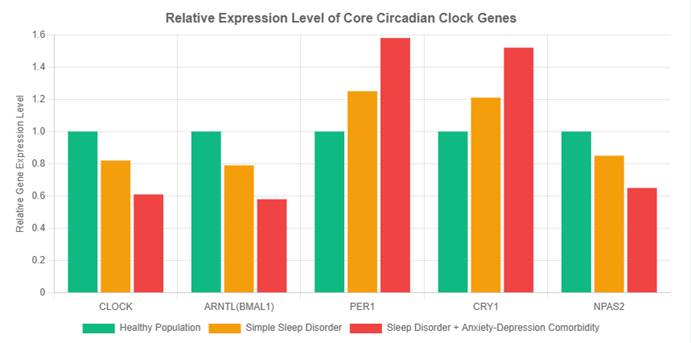
The expression rhythm and level of core circadian clock genes determine the stability of circadian function. This table compares the relative expression levels of major clock genes in different groups, reflecting the molecular pathological differences of circadian disturbance in comorbid patients.
| Core Clock Genes | Healthy Population (Relative Expression Level) | Simple Sleep Disorder Group (Relative Expression Level) | Sleep Disorder with Anxiety-Depression Comorbidity Group (Relative Expression Level) | Expression Characteristics |
| CLOCK | 1.00±0.08 | 0.82±0.11 | 0.61±0.09 | Gradual down-regulation with disease progression, severe inhibition in comorbid state |
| ARNTL (BMAL1) | 1.00±0.07 | 0.79±0.10 | 0.58±0.08 | Consistent down-regulation with CLOCK, damaged circadian transcription initiation |
| PER1 | 1.00±0.09 | 1.25±0.13 | 1.58±0.15 | Abnormal up-regulation, destroyed negative feedback loop |
| CRY1 | 1.00±0.06 | 1.21±0.12 | 1.52±0.14 | Synchronous up-regulation with PER1, circadian oscillation disorder |
| NPAS2 | 1.00±0.08 | 0.85±0.09 | 0.65±0.10 | Significant down-regulation, impaired circadian compensatory regulation |
As shown in Table 1, compared with the healthy population, the simple sleep disorder group has mild abnormal expression of core clock genes, with decreased expression of CLOCK, ARNTL, NPAS2 and increased expression of PER1, CRY1. The comorbid group shows more significant gene expression imbalance, with the most serious damage to the circadian transcription-translation feedback loop. This indicates that the degree of circadian molecular dysfunction is positively correlated with the occurrence of anxiety-depression comorbidity, and clock gene expression abnormality is an important biomarker of comorbid disease severity.
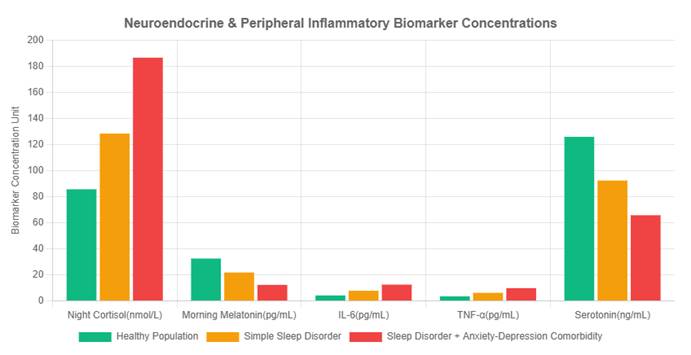
5.2 Comparison of Neuroendocrine and Inflammatory Core Indicators
Neuroendocrine disorder and inflammatory activation are key physiological manifestations of circadian disturbance-induced emotional comorbidities. This table compares the levels of HPA axis hormones, melatonin, and inflammatory factors in different groups to reflect the physiological pathological differences of comorbid state.
| Detection Indicators | Healthy Population | Simple Sleep Disorder Group | Sleep Disorder with Anxiety-Depression Comorbidity Group | Abnormal Trend |
| Night Cortisol (nmol/L) | 85.6±10.2 | 128.3±15.6 | 186.5±20.3 | Significant elevation, HPA axis hyperactivity |
| Morning Melatonin (pg/mL) | 32.5±5.8 | 21.8±4.5 | 12.3±3.2 | Significant reduction, circadian hormone rhythm reversal |
| IL-6 (pg/mL) | 4.2±1.1 | 7.8±2.3 | 12.5±3.6 | Progressive increase, chronic inflammatory activation |
| TNF-α (pg/mL) | 3.5±0.8 | 6.2±1.9 | 9.8±2.8 | Continuous up-regulation, aggravated neuroinflammation |
| Serotonin (ng/mL) | 125.8±18.5 | 92.3±15.2 | 65.7±12.1 | Significant decline, emotional neurotransmitter deficiency |
It can be seen from Table 2 that simple sleep disorder patients have mild HPA axis activation and low-grade inflammatory response, with slight decrease of melatonin and serotonin levels. While the comorbid patients present severe neuroendocrine imbalance and excessive inflammatory activation, with significantly increased night cortisol and inflammatory factors and sharply decreased protective hormones and emotional neurotransmitters. This fully proves that circadian disturbance can trigger multi-dimensional physiological abnormalities, and the superposition of multiple pathological changes leads to the occurrence of anxiety-depression comorbidities.
5.3 Comparison of Psychological Cognitive and Behavioral Characteristics
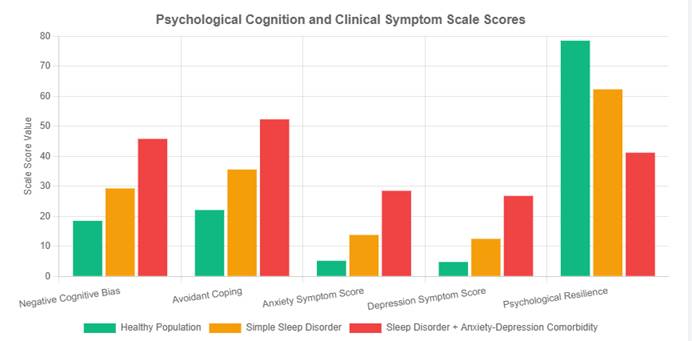
Psychological cognitive dysfunction is the direct inducement of emotional comorbidities. This table compares the cognitive bias, coping style, and emotional state indicators of different groups, reflecting the psychological pathological characteristics of comorbid patients.
| Psychological Evaluation Indicators | Healthy Population | Simple Sleep Disorder Group | Sleep Disorder with Anxiety-Depression Comorbidity Group | Psychological Performance Characteristics |
| Negative Cognitive Bias Score | 18.5±4.2 | 29.3±6.5 | 45.8±8.2 | Severe negative bias, abnormal emotional processing |
| Avoidant Coping Score | 22.1±5.3 | 35.6±7.1 | 52.3±9.5 | Passive coping dominant, reduced stress adaptation |
| Anxiety Symptom Score | 5.2±2.1 | 13.8±4.5 | 28.5±6.8 | Persistent anxiety tension, excessive worry |
| Depression Symptom Score | 4.8±1.9 | 12.5±4.2 | 26.8±6.5 | Low mood, anhedonia, hopelessness |
| Psychological Resilience Score | 78.5±10.2 | 62.3±8.5 | 41.2±7.3 | Severe decline in psychological regulation ability |
Table 3 shows that simple sleep disorder patients have mild cognitive and psychological abnormalities, with slight negative bias and decreased resilience. Comorbid patients have severe psychological cognitive dysfunction, significant increased negative cognition and avoidant coping, and sharp decreased psychological resilience, accompanied by obvious mixed anxiety and depressive symptoms. This indicates that the continuous accumulation of circadian and sleep physiological abnormalities will eventually evolve into stable psychological emotional disorders, forming a comprehensive pathological state of physiological and psychological dual damage.
6. Comprehensive Pathological Cycle and Clinical Intervention Enlightenment
6.1 Integrated Pathological Mechanism Model of Comorbid Diseases
Based on the above multi-dimensional mechanism analysis and quantitative comparison, this study constructs an integrated pathological model of circadian rhythm disturbance inducing anxiety-depression comorbidity in sleep disorder populations. The whole pathological process takes circadian clock gene oscillation imbalance as the molecular starting point, through neuroendocrine rhythm disorder, neural circuit dysfunction, immune-inflammatory activation, and psychological cognitive dysregulation, multi-pathway and multi-level jointly induce sleep quality deterioration and mixed anxiety-depression symptoms. The abnormal emotional state reversely aggravates circadian misalignment and sleep dysfunction, forming a closed-loop self-reinforcing pathological cycle covering molecule, physiology, nerve, and psychology.
In this integrated model, circadian rhythm disturbance is the core initiating and regulating factor, sleep disorder is the intermediate pathological carrier, and anxiety-depression comorbidity is the final emotional pathological outcome. The four dimensions of physiological and psychological mechanisms interact and overlap with each other: genetic molecular abnormalities determine the susceptibility of circadian dysfunction, neuroendocrine and immune inflammation build the physiological pathological basis of emotional disorders, and neural circuit and psychological cognitive dysregulation promote the occurrence and consolidation of clinical comorbid symptoms. The superposition of multi-dimensional lesions makes the comorbid disease more complex and refractory than single sleep or emotional disorder.
6.2 Clinical Intervention Enlightenment Based on Psychophysiological Mechanisms
The clarification of the psychophysiological mechanism of comorbid diseases provides precise targeted ideas for clinical intervention and treatment. Traditional single intervention methods such as simple sedative and hypnosis or single anti-anxiety and anti-depression treatment can only improve partial symptoms, but cannot break the overall pathological cycle, resulting in high disease recurrence rate. Based on the integrated pathological model, clinical intervention should adhere to the core principle of “circadian reconstruction, physiological repair, and psychological adjustment”, and carry out multi-dimensional comprehensive intervention.
At the physiological level, priority should be given to correcting circadian rhythm disorders, restoring the normal oscillation of core clock genes, adjusting HPA axis and melatonin rhythm balance, and inhibiting chronic low-grade inflammatory activation. Circadian regulation methods such as light therapy, regular work and rest intervention, and melatonin supplementation can be used to repair the central circadian clock synchronization function, improve sleep structure and quality, and cut off the physiological pathway of emotional disorder induction. At the neural level, targeted neural regulation intervention can be carried out to improve the functional connection of the prefrontal cortex-limbic system circuit, restore the balance of monoamine neurotransmitters, and enhance emotional neural regulation ability.
At the psychological level, cognitive behavioral intervention should be strengthened to correct negative cognitive bias, improve stress coping style, and enhance psychological resilience. Through psychological counseling, cognitive reconstruction, and stress management training, patients can be helped to break the psychological vicious cycle of negative cognition and emotional deterioration, and improve their independent emotional regulation ability. The combination of physiological circadian repair and psychological cognitive intervention can fundamentally break the pathological cycle of circadian disturbance, sleep dysfunction, and emotional comorbidities, and improve the long-term treatment effect of comorbid diseases.
6.3 Research Limitations and Future Prospects
This study systematically expounds the psychophysiological mechanisms of circadian rhythm disturbance and anxiety-depression comorbidity in sleep disorder populations, and constructs a quantitative index comparison system, which makes up for the deficiency of existing single correlation research. However, there are still some limitations in this study. This study is a theoretical and quantitative comparative analysis based on existing research data, and lacks long-term longitudinal clinical tracking and in-depth verification of molecular mechanism experiments. The specific regulatory threshold of core clock gene expression, the exact interaction intensity of multi-dimensional mechanisms, and the individual differences of comorbid pathogenesis still need further empirical research.
Future research can carry out long-term cohort tracking studies to clarify the dynamic evolution process of circadian disturbance, sleep dysfunction, and emotional comorbidities, and explore the key time nodes and core intervention targets of disease progression. At the molecular level, in-depth exploration of the interaction mechanism between circadian clock genes and emotion-related genes will help reveal the essential genetic basis of comorbid diseases. At the clinical level, based on the differentiated characteristics of comorbid pathological mechanisms, develop precise individualized intervention schemes, and verify the intervention effect through clinical randomized controlled trials, so as to provide more scientific and effective theoretical and practical support for the clinical prevention and treatment of sleep-emotion comorbidities.
Sleep disorder-related circadian rhythm disturbance and anxiety-depression comorbidity are interactive and mutually reinforcing complex pathological states, with complete and multi-level psychophysiological mechanisms. The abnormal oscillation of core circadian clock genes is the fundamental molecular cause of circadian misalignment. The resulting neuroendocrine rhythm disorder, neural circuit functional damage, and chronic immune-inflammatory activation build the physiological basis of sleep deterioration and emotional dysregulation. The negative cognitive bias and coping dysfunction induced by long-term circadian sleep disorders further consolidate the mixed anxiety-depression symptoms, forming a closed-loop pathological cycle covering molecule, physiology, nerve, and psychology.
Quantitative comparative analysis shows that sleep disorder patients with anxiety-depression comorbidity have more significant abnormalities in circadian gene expression, neuroendocrine inflammatory indicators, and psychological cognitive indicators than simple sleep disorder patients and healthy populations, and the degree of multi-dimensional pathological abnormalities is positively correlated with the severity of comorbid symptoms. The integrated pathological mechanism model constructed in this study clarifies the core logical relationship among circadian disturbance, sleep dysfunction, and anxiety-depression comorbidity, and reveals the hierarchical and interactive characteristics of physiological and psychological pathological changes.
Clinical intervention for such comorbid diseases should abandon single symptomatic treatment, take circadian rhythm reconstruction as the core, combine physiological repair and psychological adjustment, and implement multi-dimensional comprehensive intervention strategies to break the self-reinforcing pathological cycle. In-depth exploration of the psychophysiological mechanism of comorbid diseases is of great significance for improving the clinical diagnosis accuracy, optimizing intervention schemes, reducing disease recurrence, and improving the physical and mental health level of patients with sleep disorders.
Reference
[1]Gong S ,Chen Y ,Su L , et al. Microglia depletion alleviates the disruptions in circadian rhythms and anxiety caused by bmal1 deficiency[J].Brain, Behavior, & Immunity – Health,2026,54 101264-101264.
[2]Boiko I D ,Skrypnikov M A ,Shkodina D A , et al. Retraction Note: Circadian rhythm disorder and anxiety as mental health complications in post-COVID-19[J].Environmental Science and Pollution Research,2025,32 (57):1-1.
[3]Cox C R . Associations between sleep and circadian rhythm disruption and perinatal anxiety[J].npj Biological Timing and Sleep,2025,2 (1):33-33.
[4]He C ,Wakayama M ,Jiang H , et al. Effects of exercise on mental health in mice with circadian rhythm disruption.[J].Journal of affective disorders,2025,389 119936.
[5]Vadnie A C ,Stringfield J S ,Seney L M , et al. Editorial: Long-term effects of adolescent stress, sleep deprivation, or circadian disruption on mood and anxiety[J].Frontiers in Neuroscience,2025,19 1633483-1633483.
[6]Bouteldja A A ,Marceau A L ,Srivastava K L , et al. Early-Life Ventral Hippocampal Lesion and Circadian Disruption Result in Altered Behavior in Adult Mice in a Sex-Dependent Manner.[J].The European journal of neuroscience,2025,61 (9):e70134.
[7]Li S Y ,Fujihara H ,Fujisawa K , et al. Effects of ergothioneine on oxidative DNA damage and immune response induced by circadian rhythm disturbance in mice.[J].Journal of clinical biochemistry and nutrition,2025,76 (2):117-124.
[8]Li S Y ,Fujihara H ,Fujisawa K , et al. Effect of circadian rhythm disruption induced by time-restricted feeding and exercise on oxidative stress and immune in mice.[J].Journal of clinical biochemistry and nutrition,2025,76 (1):35-41.
[9]Sarvandani N M ,Garmabi B ,Asadi M , et al. Impact of Circadian Rhythm Disturbance and Chronotype on Medical Students’ Mental State.[J].Basic and clinical neuroscience,2025,16 (Spec Issue):219-232.
[10]Fan X ,Zhou H ,Shen Q , et al. Gamma-aminobutyric acid-enriched yogurt alleviates anxiety and memory decline in mice with circadian rhythm disorders via the gut-brain axis[J].Food Bioscience,2025,63 105676-105676.
[11]Xu K ,Zhang Y ,Shi Y , et al. Circadian rhythm disruption: a potential trigger in Parkinson’s disease pathogenesis[J].Frontiers in Cellular Neuroscience,2024,18 1464595-1464595.
[12]Schnorr T ,Fleiner T ,Trumpf R , et al. Circadian disturbances, anxiety and motor disturbances differentiate delirium superimposed on dementia from dementia-only[J].Frontiers in Psychiatry,2024,15 1407213-1407213.
[13]Dao R ,Ma P . Home-Based Mice Colony Explores the Effect of Light Therapy on the Cognitive Functions of Circadian Rhythm Disruption in Mice[J].International Journal of Pharma Medicine and Biological Sciences,2024,13 (1).
[14]Yau Y Y A ,Ng Y K ,Lau Y W , et al. A group-based transdiagnostic sleep and circadian treatment for major depressive disorder: A randomized controlled trial.[J].Journal of consulting and clinical psychology,2024.
[15]Carmel B ,Haim E ,Paul Z , et al. Beneficial effects of voluntary wheel running on activity rhythms, metabolic state, and affect in a diurnal model of circadian disruption[J].Scientific Reports,2022,12 (1):2434-2434.