Zai Jhang1,a,Tie Xu2,b*
1School of Psychology,Jiangxi Normal University, Nanchang, 330022, Jiangxi, China
2School of Psychology,Jiangxi Normal University, Nanchang, 330022, Jiangxi, China
aEmail: zaijhang@126.com
bEmail: tiexu@jxnu.edu.cn
Abstract:Bipolar disorder (BD) is a prevalent and chronic psychiatric disorder characterized by recurrent fluctuations of manic and depressive episodes, accompanied by persistent behavioral abnormalities, neurocognitive dysfunctions and social adaption disorders. Impulsive behaviors, cognitive function impairments and social function deficits are three core clinical manifestations that run through the whole course of BD, severely affecting patients’ disease prognosis, quality of life and social integration ability. This study aimed to explore the correlation mechanism among impulsive behaviors, cognitive function damage and social function deficits in BD patients, so as to provide theoretical support for clinical intervention, symptom improvement and functional rehabilitation of BD. A total of 220 patients diagnosed with BD in a tertiary psychiatric hospital from January 2023 to December 2024 were enrolled as the observation group, and 220 healthy volunteers with matched age, gender and educational level were recruited as the control group. All subjects were evaluated by Barratt Impulsiveness Scale (BIS-11), Repeatable Battery for the Assessment of Neuropsychological Status (RBANS) and Social Disability Screening Schedule (SDSS). Statistical analysis was conducted to compare the differences of impulsivity level, cognitive function and social function between the two groups, and analyze the correlation and predictive effect among the three indicators in BD patients. The results showed that the total score and each dimension score of BIS-11 and SDSS in the observation group were significantly higher than those in the control group, while the total score and each sub-item score of RBANS were significantly lower than those in the control group (P<0.05). Correlation analysis indicated that the impulsivity level of BD patients was negatively correlated with cognitive function level, and positively correlated with social function deficit degree; cognitive function impairment was negatively correlated with social function ability (P<0.01). Regression analysis verified that impulsive behaviors and cognitive function impairment were independent predictive factors of social function deficits in BD patients. This study confirms that impulsive behaviors, cognitive impairments and social function deficits have significant interactive correlation in BD patients. Severe impulsive tendencies and progressive cognitive damage can jointly aggravate social functional disorders, which provides a new perspective for targeted clinical treatment and functional rehabilitation intervention of BD.
Key words: Bipolar Disorder; Impulsive Behavior; Cognitive Impairment; Social Function Deficit; Correlation Analysis
1.1 Research Background: Disease Burden and Functional Impairment of Bipolar Disorder
Bipolar disorder is a severe mental disorder with high morbidity, high recurrence rate and high disability rate, ranking among the top causes of global mental disease-related disability. Epidemiological data show that the lifetime prevalence of BD in the general population is about 2.4% to 3.8%, and nearly 60% of patients will have recurrent episodes within 5 years after the first diagnosis. Different from single mood disorder, BD not only presents extreme emotional swings of mania and depression, but also accompanies multiple dimensional functional damage covering behavior, cognition and social interaction throughout the stable stage of the disease, which is the core cause of long-term social disability of patients. In recent years, with the continuous progress of psychiatric research, the clinical focus of BD has gradually shifted from single emotional symptom control to comprehensive functional rehabilitation, and the persistent subclinical functional impairment during the inter-episode stable period has become a research hotspot in the field of BD prognosis[1-3].
Impulsive behavior is one of the most prominent behavioral characteristics of BD patients. It refers to the unplanned, hasty and unregulated behavioral response without full rational thinking and risk assessment, which is extremely common in both manic episodes and stable periods of BD. Typical impulsive behaviors of BD patients include impulsive consumption, aggressive behavior, reckless driving, substance abuse and suicidal and self-injurious behaviors. Clinical studies have confirmed that the incidence of impulsive behaviors in BD patients is 3 to 5 times higher than that in healthy people, and severe impulsive behaviors are closely related to disease recurrence, adverse clinical events and poor long-term prognosis. Impulsive behavior is no longer regarded as a transient symptomatic performance of manic episodes, but a stable trait characteristic of BD patients, which runs through the whole disease course.
Cognitive function impairment is another core residual symptom of BD, which exists stably in the remission stage of mood symptoms and cannot be completely improved by conventional mood-stabilizing treatment. The cognitive damage of BD mainly involves multiple core fields such as attention, memory, executive function, language comprehension and visual-spatial ability. A large number of neuropsychological studies have shown that even in the euthymic stage with normal emotional performance, BD patients still have persistent deficits in working memory, inhibitory control and decision-making ability. Cognitive dysfunction not only affects patients’ daily learning and work efficiency, but also restricts their ability of emotional regulation and behavioral control, becoming the internal neuropsychological basis of abnormal behavioral manifestations of BD[4-6].
Social function deficit is the ultimate disability manifestation of BD, which is characterized by the decline or loss of patients’ abilities in social communication, interpersonal interaction, family function, occupational performance and social role adaptation. Long-term follow-up studies have found that more than 70% of BD patients have different degrees of social adaption disorders after repeated disease episodes, and nearly 40% of patients cannot return to normal work and social life for a long time. Social functional disability is the key factor leading to the decline of patients’ quality of life and the increase of social medical burden, and improving social function has become the ultimate goal of clinical treatment and rehabilitation of BD.
1.2 Research Status: Independent Study Limitations of Three Core Symptoms
At present, domestic and foreign scholars have carried out extensive research on impulsive behavior, cognitive impairment and social function deficit of BD respectively. In terms of impulsive behavior research, most studies focus on the correlation between impulsivity and disease episode type, suicidal behavior and substance abuse, confirming that high impulsivity is an important risk factor for adverse events of BD. In the field of cognitive function research, existing studies have clarified the abnormal characteristics of BD patients in multiple cognitive dimensions and explored the neural mechanism of cognitive damage based on functional magnetic resonance imaging and neuroelectrophysiological technology[7]. In terms of social function research, scholars have analyzed the influencing factors of social disability of BD from the perspectives of disease course, episode frequency and clinical symptoms.
However, most of the existing studies focus on the independent analysis of single symptom dimension, and lack of systematic exploration of the interactive relationship and internal mechanism among impulsive behavior, cognitive impairment and social function deficit. Clinical observation shows that the three functional impairments are not isolated, but interact and influence each other in the disease progression of BD. Cognitive impairment may be the internal cognitive root of impulsive behavior, frequent impulsive behaviors may further damage cognitive processing ability, and the dual damage of cognition and behavior will jointly lead to the deterioration of social function. Nevertheless, there is a lack of quantitative empirical research on the correlation intensity, action path and predictive effect of the three factors, and the internal correlation mechanism has not been fully clarified, which restricts the formulation of targeted comprehensive rehabilitation intervention schemes for BD[8-10].
1.3 Research Significance: Theoretical Innovation and Clinical Application Value
In view of the deficiencies in existing research, this study systematically analyzes the correlation among impulsive behavior, cognitive function impairment and social function deficit in BD patients based on clinical empirical data, explores the mutual influence mechanism and quantitative relationship of the three core functional impairments, and constructs a predictive model of social function deficit based on impulsive behavior and cognitive level. The research results can make up for the deficiency of single-dimensional research in the current academic circle, enrich the theoretical system of functional impairment of BD, and clarify the internal logical relationship between behavioral symptoms, cognitive damage and social disability of the disease.
In clinical practice, the research conclusions can provide targeted intervention ideas for clinical treatment and rehabilitation of BD. For patients with high impulsivity and severe cognitive impairment, early targeted intervention can be carried out to reduce impulsive behavioral risk, improve cognitive processing ability, and then block the progression of social function damage. It helps to reduce the long-term disability rate of BD patients, improve their social integration ability and quality of life, and reduce the social medical burden caused by the disease, which has important theoretical significance and practical clinical value[11-13].
2. Research Objects and Methods
2.1 Research Objects: Group Setting and Sample Source
This study adopted a case-control research design. The research objects were BD patients hospitalized and treated in a tertiary specialized psychiatric hospital from January 2023 to December 2024, and healthy volunteers recruited from the community during the same period. All subjects signed informed consent voluntarily, and this study was approved by the hospital ethics committee (Ethics Approval No.: PSY2023018).
Inclusion criteria for observation group (BD patients): (1) Meet the diagnostic criteria for bipolar disorder in the Fifth Edition of Diagnostic and Statistical Manual of Mental Disorders (DSM-5); (2) Age 18-60 years old, regardless of gender; (3) Educational level above primary school, able to cooperate with scale evaluation and neuropsychological tests; (4) The disease course is more than 6 months, and the patients are in the stable remission stage after clinical treatment, with no obvious severe manic or depressive acute symptoms; (5) No history of severe organic diseases of the nervous system.
Exclusion criteria for observation group: (1) Combined with schizophrenia, obsessive-compulsive disorder and other severe mental disorders; (2) Combined with severe brain injury, cerebrovascular disease, dementia and other organic cognitive damage diseases; (3) Combined with severe visceral organ dysfunction, malignant tumor and other serious physical diseases; (4) Long-term use of psychoactive drugs other than mood stabilizers that affect cognitive and behavioral functions; (5) Pregnant or lactating women; (6) Unable to cooperate with the completion of experimental evaluation due to poor compliance.
Inclusion criteria for control group (healthy volunteers): (1) No history of mental disorders and family history of hereditary mental diseases; (2) Age, gender and educational level were matched with the observation group; (3) No severe organic diseases and cognitive dysfunction; (4) Good mental state, able to cooperate with all test evaluations.
A total of 220 BD patients were included in the observation group, including 118 males and 102 females, with an average age of (32.56±8.42) years old and an average disease course of (5.82±2.36) years. A total of 220 healthy volunteers were included in the control group, including 115 males and 105 females, with an average age of (31.98±8.26) years old. There was no significant difference in general demographic data such as age, gender and educational level between the two groups (P>0.05), which was comparable.
2.2 Evaluation Tools: Scale Selection and Index Measurement
2.2.1 Barratt Impulsiveness Scale (BIS-11)
The BIS-11 scale is the most widely used professional evaluation tool for individual impulsivity level at home and abroad, which is used to evaluate the impulsive behavioral tendency of subjects in daily life. The scale consists of 30 items, including three dimensions: attentional impulsivity, motor impulsivity and non-planning impulsivity. The scoring adopts 5-level Likert scoring method, with a total score range of 30-150 points. The higher the total score and each dimension score, the more serious the individual’s impulsive tendency. The Cronbach’s α coefficient of the scale in this study was 0.892, indicating good reliability and validity.
2.2.2 Repeatable Battery for the Assessment of Neuropsychological Status (RBANS)
The RBANS scale is a standardized neuropsychological assessment scale suitable for evaluating the overall cognitive function of adults, which covers five core cognitive dimensions: immediate memory, delayed memory, attention function, language function and visual-spatial function. The scale has a total of 12 sub-tests, with a full score of 100 points. The higher the score, the better the cognitive function of the subject, and the lower the score, the more severe the cognitive impairment. The scale has the advantages of short evaluation time, good repeatability and high accuracy, and is suitable for cognitive function evaluation of psychiatric patients. In this study, the Cronbach’s α coefficient of the scale was 0.876, with good structural validity.
2.2.3 Social Disability Screening Schedule (SDSS)
The SDSS scale is a special evaluation tool for social function deficit of mental patients, which is used to quantitatively evaluate the degree of social adaption disorder of subjects. The scale includes 10 evaluation items covering occupational function, social communication, family life, self-care ability and other dimensions. The total score ranges from 0 to 20 points. 0 points indicates normal social function, and the higher the score, the more severe the social function deficit. The scale is widely used in social function evaluation of chronic mental diseases such as bipolar disorder and schizophrenia, with high clinical applicability. The Cronbach’s α coefficient of the scale in this study was 0.881.
2.3 Research Procedures: Standardized Operation and Quality Control
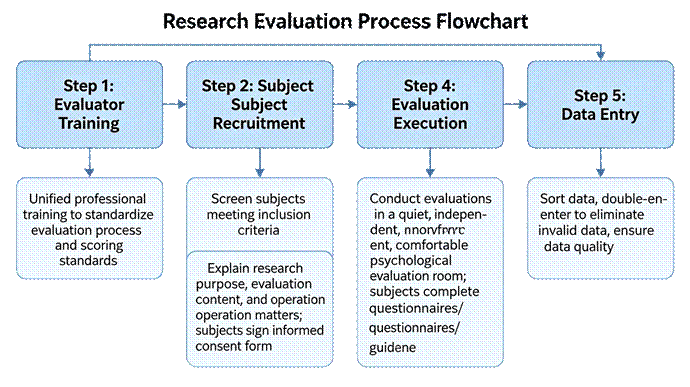
Before the formal evaluation, all evaluators received unified professional training to standardize the evaluation process and unified scoring standards. After the subjects met the inclusion criteria, the researchers explained the research purpose, evaluation content and operation matters to the subjects in detail, and signed the informed consent form after the subjects understood and agreed. All scale evaluations and neuropsychological tests were completed in a quiet, independent and comfortable psychological evaluation room to avoid external environmental interference.
The evaluation sequence of all subjects was unified: first, the general demographic data questionnaire was completed, then the BIS-11 impulsivity evaluation was carried out, followed by the RBANS cognitive function test, and finally the SDSS social function evaluation. The whole evaluation process was completed by the subjects independently under the guidance of professional evaluators, and the evaluators timely answered the subjects’ questions in the evaluation process to ensure the accuracy and authenticity of the evaluation data. After all evaluations were completed, the data was sorted out and double-entered to eliminate invalid data and ensure data quality.
2.4 Statistical Methods: Data Processing and Analysis Standards
All research data were sorted and counted by SPSS 26.0 statistical software. The measurement data conforming to normal distribution were expressed as mean ± standard deviation (x±s), and the comparison between groups was performed by independent sample t-test. The count data were expressed as rate (%), and the comparison between groups was performed by χ² test. Pearson correlation analysis was used to analyze the correlation among impulsivity level, cognitive function and social function deficit of BD patients. Multiple linear regression analysis was used to screen the independent influencing factors of social function deficit. P<0.05 was considered statistically significant, and P<0.01 was considered extremely statistically significant.
3.1 Comparison of Impulsive Behavior Levels Between Two Groups
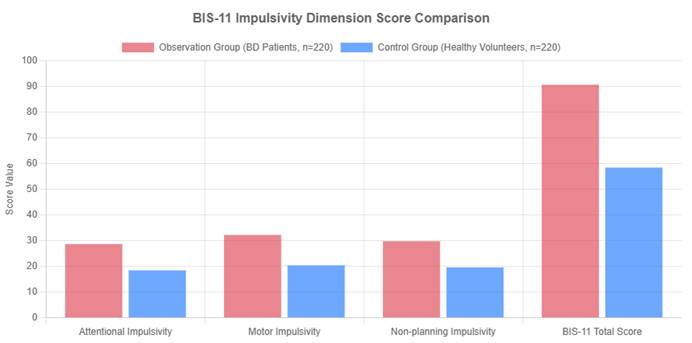
The total score and three dimension scores of BIS-11 in the observation group (BD patients) were significantly higher than those in the control group (healthy volunteers), and the differences were extremely statistically significant (P<0.01). It indicated that BD patients had more prominent impulsive behavioral tendencies than healthy people, with widespread abnormalities in attentional impulsivity, motor impulsivity and non-planning impulsivity. The specific data comparison is shown in Table 1.
| Group | Case Number | Attentional Impulsivity | Motor Impulsivity | Non-planning Impulsivity | Total BIS-11 Score |
| Observation Group | 220 | 28.65±4.32 | 32.18±5.16 | 29.74±4.85 | 90.57±12.36 |
| Control Group | 220 | 18.42±3.65 | 20.36±4.28 | 19.58±3.92 | 58.36±10.25 |
| t Value | – | 26.852 | 25.147 | 23.965 | 29.784 |
| P Value | – | <0.001 | <0.001 | <0.001 | <0.001 |
3.2 Comparison of Cognitive Function Levels Between Two Groups
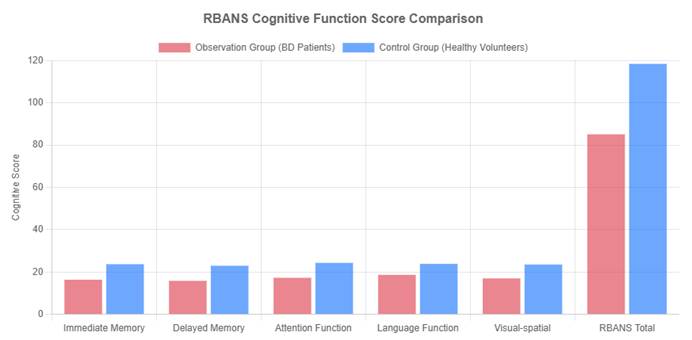
The total RBANS score and the scores of five cognitive dimensions including immediate memory, delayed memory, attention, language and visual-spatial function in the observation group were significantly lower than those in the control group, and the differences were extremely statistically significant (P<0.01). It confirmed that BD patients had extensive cognitive function impairment, and all core cognitive fields were damaged to varying degrees. The specific cognitive function comparison data are shown in Table 2.
| Cognitive Dimension | Observation Group (n=220) | Control Group (n=220) | t Value | P Value |
| Immediate Memory | 16.35±3.26 | 23.68±2.85 | -25.416 | <0.001 |
| Delayed Memory | 15.82±3.14 | 22.95±2.76 | -24.782 | <0.001 |
| Attention Function | 17.26±2.98 | 24.32±2.68 | -26.153 | <0.001 |
| Language Function | 18.65±2.74 | 23.86±2.52 | -21.368 | <0.001 |
| Visual-spatial Function | 16.98±3.05 | 23.54±2.79 | -23.895 | <0.001 |
| Total RBANS Score | 85.06±10.24 | 118.35±8.62 | -36.582 | <0.001 |
3.3 Comparison of Social Function Deficits Between Two Groups
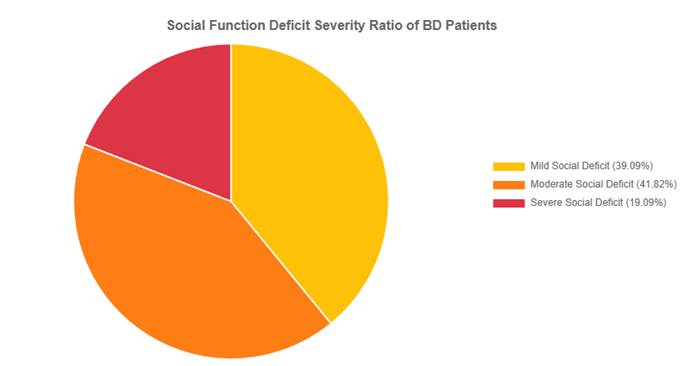
The total SDSS score of the observation group was significantly higher than that of the control group, and the difference was extremely statistically significant (P<0.01). In terms of the constituent ratio of social function deficit, the proportion of patients with mild, moderate and severe social disability in the observation group was significantly higher than that in the control group, indicating that BD patients had obvious social function impairment and severe social adaption disorder. The specific comparison results are shown in Table 3.
| Group | Case Number | SDSS Total Score (x±s) | Mild Deficit [n(%)] | Moderate Deficit [n(%)] | Severe Deficit [n(%)] |
| Observation Group | 220 | 12.36±3.58 | 86(39.09) | 92(41.82) | 42(19.09) |
| Control Group | 220 | 2.15±1.02 | 12(5.45) | 0(0.00) | 0(0.00) |
| Statistical Value | – | t=39.658 | χ²=68.925 | χ²=98.364 | χ²=44.182 |
| P Value | – | <0.001 | <0.001 | <0.001 | <0.001 |
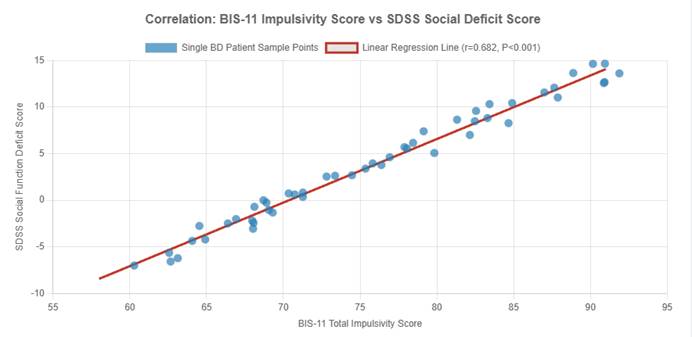
3.4 Correlation Analysis of Three Core Indicators in BD Patients
3.5 Multiple Regression Analysis of Influencing Factors of Social Function Deficit
4. Discussion
4.1 Symptom Characteristics: Dual Abnormity of Impulse and Cognition in BD
This study found that BD patients in the stable remission stage still had significantly higher impulsivity level and more severe cognitive impairment than healthy people, which is consistent with the conclusions of most previous clinical studies. Impulsive behavior of BD patients is not only a transient symptomatic performance in acute manic episodes, but a stable trait feature of the disease. The three dimensions of attentional impulsivity, motor impulsivity and non-planning impulsivity of BD patients are all significantly abnormal, indicating that patients have widespread defects in attention control, behavioral inhibition and decision-making planning. In terms of attention control, BD patients are prone to attention distraction, unable to concentrate on task processing, and easy to make hasty behavioral responses under external stimulation; in terms of motor inhibition, patients lack effective behavioral restraint ability, and are prone to impulsive behaviors such as aggression and reckless behavior; in terms of planning ability, patients have poor long-term thinking and risk assessment ability, and their behavioral decisions are random and lack rationality.
In terms of cognitive function, this study confirmed that BD patients have extensive damage in memory, attention, language and visual-spatial cognitive fields. As the core cognitive defect of BD, working memory and attention dysfunction directly affect patients’ information processing and cognitive decision-making ability. Neuroimaging studies have shown that the prefrontal cortex, which dominates executive function and behavioral control, and the hippocampus, which dominates memory processing, have abnormal functional activation and structural atrophy in BD patients, which is the neural basis of cognitive impairment and impulsive behavioral tendency. The persistent cognitive impairment in the remission stage leads to the inability of patients to form rational cognitive judgment and effective behavioral self-regulation, which lays a cognitive foundation for the frequent occurrence of impulsive behaviors.
4.2 Correlation Mechanism: Interactive Path of Cognition, Impulse and Social Function
Correlation analysis of this study clarified the significant interactive correlation among cognitive impairment, impulsive behavior and social function deficit in BD patients. There is a close negative correlation between cognitive function impairment and impulsive behavior. The more severe the cognitive damage of patients, the higher the impulsivity level. Cognitive dysfunction is the internal root of impulsive behavioral abnormalities in BD patients. Patients with insufficient attention resource allocation, impaired memory processing and defective executive function cannot effectively identify behavioral risks, regulate emotional states and inhibit inappropriate behavioral impulses, thus showing frequent impulsive behaviors. On the contrary, long-term repeated impulsive behaviors will further aggravate the consumption of cognitive resources, damage the stability of neural cognitive circuits, and lead to the progressive decline of cognitive function, forming a vicious cycle of “cognitive damage – impulse aggravation – further cognitive deterioration”.
Both cognitive impairment and impulsive behavior are positively correlated with the degree of social function deficit, and the dual damage of cognition and behavior jointly promotes the deterioration of social function of BD patients. Social interaction and social role adaptation require individuals to have normal cognitive processing ability and behavioral self-regulation ability. In social scenarios, patients with cognitive impairment cannot accurately identify social information, understand social rules and judge interpersonal feedback, resulting in obstacles in social communication and interpersonal interaction. At the same time, frequent impulsive behaviors such as sudden emotional outburst, aggressive behavior and reckless decision-making will damage interpersonal relationships, break social interaction norms, and make patients unable to adapt to social roles such as work, family and social communication. The superposition of cognitive defects and behavioral abnormalities ultimately leads to the continuous aggravation of social function deficit in BD patients.
4.3 Predictive Value: Independent Effect of Core Symptoms on Social Disability
4.4 Clinical Enlightenment: Targeted Intervention Strategy for Functional Rehabilitation
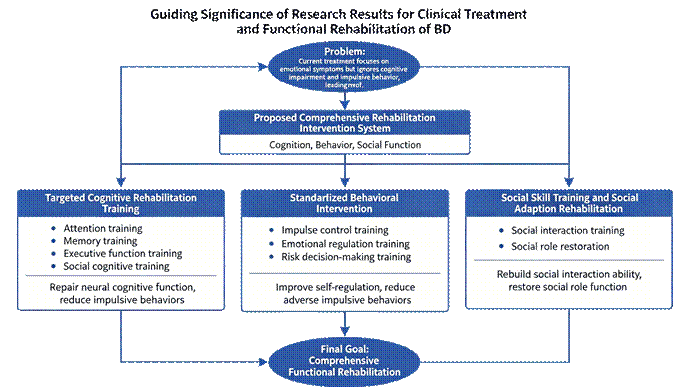
The research results have important guiding significance for clinical treatment and functional rehabilitation of BD. At present, the clinical treatment of BD mainly focuses on controlling emotional symptoms through mood stabilizers, but ignores the intervention of residual cognitive impairment and impulsive behavioral traits, resulting in many patients having normal emotional symptoms but persistent social disability. Based on the correlation mechanism of the three core indicators in this study, clinical intervention should change the single symptomatic treatment mode and build a comprehensive rehabilitation intervention system covering cognition, behavior and social function.
First of all, targeted cognitive rehabilitation training should be carried out for BD patients with cognitive impairment, including attention training, memory rehabilitation, executive function training and social cognitive training, to repair patients’ neural cognitive function, improve information processing and rational decision-making ability, and fundamentally reduce the cognitive basis of impulsive behaviors. Secondly, standardized behavioral intervention should be implemented for patients with high impulsivity, including impulse control training, emotional regulation training and risk decision-making training, to improve patients’ behavioral self-regulation ability and reduce the occurrence of adverse impulsive behaviors. Finally, on the basis of cognitive and behavioral improvement, social skill training and social adaption rehabilitation intervention should be carried out to help patients rebuild social interaction ability and restore social role function, so as to achieve the goal of comprehensive functional rehabilitation.
5. Research Limitations and Future Prospects
This study is a cross-sectional clinical study, which can only clarify the correlation among impulsive behavior, cognitive impairment and social function deficit in BD patients, but cannot accurately determine the causal sequence and dynamic evolution mechanism of the three indicators. In addition, the research subjects are only from a single medical institution, and the sample source has certain limitations, which may affect the popularization of the research results[14]. At the same time, this study only evaluated the behavioral and cognitive surface indicators, and did not combine neural imaging, neuroelectrophysiology and other technical means to explore the deep neural mechanism of the interaction of the three functional impairments, which is insufficient in the exploration of internal mechanism.
In the follow-up study, a longitudinal follow-up design will be adopted to dynamically track the changes of impulsive behavior, cognitive function and social function of BD patients in different disease stages, clarify the causal relationship and dynamic evolution rule among the three indicators, and reveal the progressive damage mechanism of functional impairment. At the same time, multi-center sample collection will be carried out to expand the sample size and improve the representativeness and credibility of the research results. In addition, future research will combine functional magnetic resonance imaging, event-related potential and other neuroimaging technologies to explore the abnormal neural circuits corresponding to the interaction of cognitive impairment, impulsive behavior and social dysfunction, clarify the neural biological mechanism of functional impairment of BD, and provide more accurate biological markers and targeted intervention targets for clinical rehabilitation treatment of BD[15].
This cross-sectional case-control study systematically analyzes the correlation among impulsive behaviors, cognitive function impairments and social function deficits in patients with bipolar disorder. The research results confirm that BD patients have significant high impulsivity tendency, extensive cognitive functional damage and severe social functional deficit compared with healthy people in the stable disease stage. Impulsive behavior, cognitive impairment and social function deficit have significant mutual correlation: cognitive function level is negatively correlated with impulsive behavior level and social function deficit degree, and impulsive behavior is positively correlated with social function deficit degree. Cognitive impairment and impulsive behavior are independent risk factors for social functional disability of BD patients, which can jointly predict the long-term social function prognosis of patients.
The vicious cycle of cognitive damage aggravation and impulsive behavior recurrence is the core reason for the persistent social functional impairment of BD patients. Clinical work should change the traditional treatment mode focusing on emotional symptom control, pay attention to the comprehensive intervention of residual cognitive dysfunction and impulsive behavioral traits in the stable stage of BD, and carry out targeted cognitive rehabilitation and behavioral regulation training, so as to effectively improve the social adaption ability and long-term quality of life of BD patients and reduce the social disability rate of the disease.
Reference
[1]Maruki T ,Tsuboi T ,Maeshima H , et al. A preliminary cross-sectional study of bipolarity and primary pharmacotherapy in long-term stable patients with major depressive disorder.[J].International journal of bipolar disorders,2026.
[2]Salimi Z ,Norouzi M ,Eghbalian M , et al. Serum IL-17A and CCL20 levels and their correlation with obsessive-compulsive disorder and suicidality in schizophrenia and bipolar mood disorder.[J].BMC psychiatry,2026.
[3]Lopez G J ,Wingen V G ,Vriend C , et al. Running therapy reorganizes dynamic brain networks linked to symptom improvement in affective disorders.[J].Biological psychiatry. Cognitive neuroscience and neuroimaging,2026.
[4]Tozzi L ,Dauvermann R M ,Corley E , et al. Brain Morphology Mediators of the Association of Childhood Trauma With Bipolar Disorder: An International ENIGMA Bipolar Disorder Working Group Study.[J].JAMA psychiatry,2026.
[5]Kokwaro L ,Krüger H ,Stratmann D , et al. Determinants of Digital Health Resource Utilization Among Individuals With Self-Reported Bipolar Disorder in Germany-A Cross-Sectional Study Based on the Andersen Model.[J].Bipolar disorders,2026,28 (4):e70128.
[6]Saini R ,Verma K P ,Rai P . Valproate-induced acute necrotising pancreatitis in a young woman with bipolar disorder: Sustained remission after switch to lithium.[J].Tropical doctor,2026, 494755261456495.
[7]Mikhalitskaya V E ,Levchuk A L ,Boiko S A , et al. Immunoinflammatory Markers in Patients with Affective Disorders: Genetic Polymorphisms, Peripheral Cytokine Levels, and Expression of IL-1β, IL-13, TNF-β, and TGF-α in Peripheral Blood Mononuclear Cells[J].Biochemistry (Moscow),2026,91 (5):780-788.
[8]Levit A ,Lam F ,Nunez J J , et al. Factors influencing delays in the diagnosis and treatment of bipolar disorder in adolescents and young adults: systematic scoping review.[J].BJPsych open,2026,12 (3):e143.
[9]Ellenbogen A M ,Serravalle L ,Hodgins S , et al. Low levels of organization and consistency in the home in middle childhood predicts cortisol levels and internalizing symptoms 12 years later among the offspring of parents with bipolar disorder.[J].Psychoneuroendocrinology,2026,191 107904.
[10]Nylander O P ,Lexne E ,Lehman C , et al. Bipolar disorder. V: Differences between single and multiple suicide attempters in a long-term follow-up study of patients with bipolar disorder[J].Journal of Affective Disorders Reports,2026,25 101070-101070.
[11]Xiaoling L ,Ruoyun M ,Lixia Z , et al. Psychometric validation of the Chinese version of the Bipolar Disorder Knowledge Scale (BDKS-C) among diverse populations and association with beliefs and attitudes toward people with bipolar disorder and help-seeking attitudes[J].Medicine,2026,105 (21):e48994-e48994.
[12]Barendse A E M ,Poortman R S ,Ching K R C , et al. White matter microstructure in relatives of people with schizophrenia or bipolar disorder: an ENIGMA meta-analysis[J].Molecular Psychiatry,2026, (prepublish):1-8.
[13]Vedel L K ,Klaus M . Bipolar disorder and the risk of developing dementia – a systematic review and meta-analysis[J].Current Opinion in Psychiatry,2026.
[14]Matoba P N ,Mose S N S ,Schutte T . A profile of psychotropic medication in bipolar patients of reproductive age[J].South African Journal of Psychiatry,2026.
[15]Tanrıseven E ,Sağtaş E ,Topak Z O , et al. An evaluation of the differences in thalamic nuclei and subnuclei among patients with schizophrenia and schizoaffective disorder.[J].Psychiatry research. Neuroimaging,2026,361 112250.