DOI:http://doi.org/10.65613/741826
Dr.Sophia Bertha
Professor,
Ghent University Belgium
Email: :Sophia.Bertha@gmail.com
Abstract: With the development of fintech and popularization of wealth management concepts, intelligent investment consultants have become important in the wealth management market, offering low – cost, efficient and personalized services. Traditional strategies rely on the “rational man” assumption, ignoring investors’ behavioral biases like loss aversion. Loss aversion, proposed in prospect theory, means investors feel more pain from losses than pleasure from equivalent gains. This bias leads to irrational decisions, affecting investment returns and service effectiveness.
Therefore, exploring the optimization path of intelligent investment consultant strategies from the perspective of loss aversion is significant. This paper first combs related theories, analyzes the impact of loss aversion on decision – making and the defects of traditional strategies. Then, based on loss – aversion characteristics, it proposes targeted optimization schemes in investor portrait construction, asset allocation, risk control and investor education. Finally, it verifies the optimized strategy’s effectiveness through empirical analysis and gives relevant suggestions. The research shows that the optimized strategy can better adapt to investors’ behavior, reduce the negative impact of loss aversion, improve investment experience and returns, and enhance service competitiveness.
Keywords: Loss Aversion; Intelligent Investment Consultant; Strategy Optimization; Prospect Theory; Asset Allocation
In recent years, driven by AI, big data, and cloud computing, the fintech industry has developed rapidly, and the wealth management market has entered a digital and intelligent era. Intelligent investment consultants, a new wealth management service model, integrate financial theory, algorithm models, and technology. They can generate personalized investment portfolios based on investors’ risk preferences, goals, and asset status, and adjust them with market changes[1]. Compared with traditional manual investment consultants, they have advantages like low threshold, low cost, high efficiency, and strong objectivity, and are widely recognized by investors. By 2025, China’s intelligent investment consultants’ asset management scale exceeded 500 billion yuan, and the number of users exceeded 100 million, showing strong momentum.
However, as the market scale of intelligent investment consultants expands, problems have emerged. Traditional strategies are often based on classical financial theories assuming investors are rational. But in reality, investors are affected by behavioral biases, especially loss aversion. Kahneman and Tversky (1979) proposed the prospect theory, stating that loss aversion is common. The psychological utility loss from a loss is 2 – 2.5 times the utility gain from an equal gain. This makes investors over – emphasize loss risks and make irrational decisions, such as holding loss – making assets or selling profitable assets prematurely[2-4]. These behaviors reduce investors’ returns and the effectiveness of recommended portfolios, decreasing user trust and satisfaction.
Currently, most research on intelligent investment consultants focuses on algorithm optimization, asset allocation efficiency, and service scope expansion. Few studies combine loss aversion for strategy optimization[5]. The mismatch between traditional strategies and investors’ behavioral characteristics (especially loss aversion) restricts the industry’s development. Therefore, it is necessary to study the impact of loss aversion on decision – making, find defects in traditional strategies, and propose targeted optimization schemes. This study starts from loss aversion to explore the strategy optimization path, which can enrich theories and guide the industry’s development, meet investors’ needs, and promote the healthy development of the wealth management market.
Loss aversion, the core of prospect theory proposed by Kahneman and Tversky in 1979, is the psychological tendency where investors feel far more pain from losses than pleasure from equivalent gains. In prospect theory, they introduced the value function to describe the relationship between investors’ subjective value and gains/losses. The value function has three features: it uses a reference point as the origin, with gains and losses relative to it; it’s convex in the loss area and concave in the gain area, meaning investors are risk – averse in the gain area and risk – seeking in the loss area[6]; its slope is steeper in the loss area, showing losses have a greater impact on psychological utility. For example, losing 100 yuan causes much more pain than gaining 100 yuan, and investors usually need to gain 200 – 250 yuan to offset the pain of losing 100 yuan. Loss aversion is a common psychological phenomenon present in various investment scenarios, like in the stock market where investors often hold losing stocks for a long time and are unwilling to… Investors hold losing stocks to avoid “real” losses and sell profitable ones to lock in profits, resulting in “winning small and losing big”. In the fund market, investors panic and redeem when the net value falls, intensifying fluctuations, and redeem when it rises, missing appreciation opportunities. These are manifestations of loss aversion, affected by factors like psychological quality, investment experience, risk capacity, and market environment. Novice investors show more obvious loss aversion due to lack of experience and stronger fear of losses. Experienced investors can restrain it but can’t fully avoid its impact in extreme market fluctuations. Loss aversion affects investors’ decision – making in two ways: it makes them overly risk – averse, preferring low – risk, low – return assets and missing high – return opportunities; it also leads to irrational decisions like blind stop – loss and holding losses, reducing investment returns and even causing serious losses[7-9]. Therefore, understanding loss aversion’s characteristics and impact is the premise of optimizing the intelligent investment consultant strategy.
2.2 Intelligent Investment Consultant
Intelligent investment consultant, or robo – advisor, is a financial service model using AI, big data, and algorithm models to collect and analyze investors’ information and offer personalized investment advice and asset allocation services. Its core is the algorithm model, including asset allocation, risk assessment, and market prediction models. The working process has four steps: first, collect investors’ information like risk preference, investment goal, etc.; second, assess investors’ risk – bearing capacity and needs via the risk assessment model; third, generate personalized investment portfolios with stocks, bonds, etc. according to the asset allocation model; fourth, adjust the portfolio dynamically based on market and investor needs to meet expected goals. The development of intelligent investment consultants has gone through three stages: tThere are three stages: the initial, development, and mature stages. In the initial stage, intelligent investment consultants offered simple asset – allocation services via fixed algorithms, with single functions and low personalization[10]. In the development stage, as big data and AI technology improved, they focused on investors’ individual differences and adjusted portfolios according to market changes. In the mature stage, they will integrate more behavioral finance theories, consider the impact of investors’ behavioral biases on decision – making, and offer more humanized and personalized services. Currently, the industry is transitioning from the development to the mature stage, and strategy optimization based on behavioral biases like loss aversion is an important development direction.
The core advantages of intelligent investment consultants are low cost, high efficiency, strong objectivity, and wide coverage. Compared with traditional manual consultants, they don’t require high fees, have a low investment threshold, and can serve small and medium investors. Also, they make decisions based on algorithm models. NS can avoid human emotions and subjective factors, being highly objective. Intelligent investment consultants can offer 24 – hour Internet – based services to a wide range of users. However, traditional intelligent investment consultants have obvious defects, mainly ignoring investors’ behavioral biases. The strategy design is based on the “rational man” assumption, causing a mismatch between the recommended portfolio and investors’ actual decision – making[11-13].
2.3 The Relationship Between Loss Aversion and Intelligent Investment Consultant Strategy
The core goal of the intelligent investment consultant strategy is to match the portfolio with investors’ risk preferences and goals to maximize returns under controllable risks. But loss aversion, a common behavioral bias, makes investors’ actual risk preferences deviate from stated ones, leading to the strategy failing to achieve the expected effect. For example, investors may claim to bear a certain loss when evaluating risk capacity, but panic and redeem when the portfolio incurs a small loss. Portfolios recommended by intelligent investment consultants aren’t held for long, so expected long – term returns can’t be achieved. The impact of loss aversion on intelligent investment consultant strategies is shown in three aspects. First, the risk assessment of investors is inaccurate. Traditional intelligent investment consultants use questionnaires to evaluate investors’ risk – bearing capacity. However, due to loss aversion, investors’ questionnaire answers may not reflect their actual capacity, causing the recommendation of either overly risky or overly conservative portfolios. Second, the asset allocation strategy is unsuitable. Traditional strategies are based on modern portfolio theory, which pursues maximum return at a given risk or minimum risk at a given return, but ignores the impact of loss aversion on investors’ acceptance of risk and return. For example, in the loss area, investors are risk – seeking, but traditional strategies recommend low – risk assets, not meeting investors’ psychological needs[14]. Third, the risk control mechanism is imperfect. Traditional intelligent investment consultants set fixed stop – loss and take – profit points, but due to loss aversion, investors may not follow these rules. Failure of risk control. Thus, the intelligent investment consultant strategy should consider the impact of loss aversion, optimize the design according to its characteristics. This makes the investment portfolio more in line with investors’ actual decision – making behavior, improves user acceptance and stickiness of the strategy, and finally maximizes investors’ investment returns.
3.1 Current Situation of Intelligent Investment Consultant Strategy
With the rapid development of the intelligent investment consultant industry, financial institutions and fintech companies have launched products like Ant Fortune’s “Zhima Fortune Management”, Tencent Finance’s “Tencent Zhitou”, and ICBC’s “Intelligent Investment Consultant”. These products vary in service objects, product types, and strategy design. Overall, current intelligent investment consultant strategies have the following characteristics:
First, risk assessment mainly uses questionnaires. Most evaluate investors’ risk – bearing capacity through online questionnaires about age, income, etc. Based on answers, investors are classified into different risk levels and corresponding portfolios are recommended.
Second, asset allocation is based on modern portfolio theory. Traditional strategies build on this theory, selecting low – correlated assets to form portfolios for risk diversification and return improvement. Common models include mean – variance and Black – Litterman, but they ignore behavioral biases.
Third, the risk control mechanism is simple. Most set fixed stop – loss and take – profit points according to investors’ risk levels and adjust portfolios when the set values are reached. However, it can’t adapt to changes in investors’ psychology and the market.
Fourth, investor education is insufficient. Most focus on investment advice and asset allocation, ignoring guiding investors to understand risks and restrain behavioral biases, which affects strategy effectiveness.
3.2 Defects of Intelligent Investment Consultant Strategy in Dealing with Loss Aversion
Although the current strategy has achieved some results, from the perspective of loss aversion, there are obvious defects:
First, the risk assessment method is inaccurate as it doesn’t consider loss aversion. Questionnaire – based assessments may not reflect investors’ actual risk – bearing capacity under loss aversion, leading to mismatched portfolio recommendations.
Second, the asset allocation strategy is not humanized. It is based on the rational – man assumption, ignoring investors’ psychological needs under loss aversion. It also doesn’t adjust according to changes in loss – aversion degree.
Third, the risk control mechanism is rigid. Fixed stop – loss and take – profit points can’t account for the impact of loss aversion on investors’ decisions, failing to guide rational decisions and reduce negative impacts.
Fourth, the lack of effective investor education means investors can’t restrain loss aversion. Most intelligent investment consultants don’t provide targeted guidance, causing investors to make irrational decisions even with reasonable portfolio recommendations.
4. Strategy Optimization of Intelligent Investment Consultant from the Perspective of Loss Aversion
In view of the defects of the traditional intelligent investment consultant strategy in dealing with loss aversion, this paper puts forward targeted optimization schemes from four aspects: investor portrait construction, asset allocation strategy, risk control mechanism and investor education, so as to make the intelligent investment consultant strategy more in line with the behavioral characteristics of investors, reduce the negative impact of loss aversion, and improve the effectiveness of the strategy.
4.1 Optimize Investor Portrait Construction and Accurately Evaluate Risk Bearing Capacity
The accurate construction of investor portrait is the premise of optimizing the intelligent investment consultant strategy. Traditional investor portraits are mainly based on demographic characteristics and questionnaire information, which cannot reflect the impact of loss aversion on investors’ risk bearing capacity. Therefore, it is necessary to optimize the investor portrait construction method, integrate the loss aversion degree of investors into the portrait system, and accurately evaluate the actual risk bearing capacity of investors.
First, expand the information collection scope. On the basis of the original demographic characteristics and questionnaire information, collect investors’ historical investment behavior data, including transaction records, holding time, stop-loss and take-profit behavior, etc. Through the analysis of historical investment behavior data, we can judge the loss aversion degree of investors. For example, investors who often redeem when suffering a small loss have a high degree of loss aversion; investors who can hold loss-making assets for a long time have a low degree of loss aversion[15].
Second, establish a loss aversion evaluation index system. Based on the prospect theory, establish a set of loss aversion evaluation indexes, including loss aversion coefficient, risk perception degree, decision-making delay time, etc. The loss aversion coefficient is used to measure the relative intensity of investors’ pain caused by losses and pleasure caused by gains; the risk perception degree is used to measure the sensitivity of investors to investment risks; the decision-making delay time is used to measure the rationality of investors’ decision-making when facing gains and losses. Through these indexes, the loss aversion degree of investors can be quantitatively evaluated.
Third, build a dynamic investor portrait. The loss aversion degree of investors is not fixed, but will change with the changes of investment experience, market environment and psychological state. Therefore, it is necessary to establish a dynamic investor portrait, update the investor’s information and loss aversion degree in real time, and adjust the investment strategy accordingly. For example, with the increase of investment experience, the loss aversion degree of investors may decrease; in the market downturn, the loss aversion degree of investors may increase.
4.2 Optimize Asset Allocation Strategy and Adapt to Investors’ Behavioral Characteristics
The asset allocation strategy is the core of the intelligent investment consultant strategy. To optimize the asset allocation strategy from the perspective of loss aversion, it is necessary to combine the characteristics of loss aversion, adjust the asset allocation ratio and portfolio structure, so as to reduce the negative impact of loss aversion on investors’ decision-making and improve the acceptance of the investment portfolio by investors.
First, adopt a dynamic asset allocation strategy based on loss aversion degree. According to the loss aversion degree of investors, adjust the asset allocation ratio dynamically. For investors with high loss aversion, increase the proportion of low-risk assets (such as bonds, money market funds) in the investment portfolio, reduce the proportion of high-risk assets (such as stocks, equity funds), and reduce the volatility of the investment portfolio, so as to reduce the probability of investors facing losses; for investors with low loss aversion, appropriately increase the proportion of high-risk assets, so as to improve the expected return of the investment portfolio. At the same time, adjust the asset allocation ratio according to the changes of market environment. In the market upturn, increase the proportion of high-risk assets; in the market downturn, increase the proportion of low-risk assets, so as to reduce the impact of market fluctuations on the investment portfolio.
Second, design a “loss control” oriented portfolio structure. In view of the psychological characteristics of investors who are afraid of losses, design a portfolio structure that focuses on loss control. For example, adopt the “core-satellite” portfolio structure: the core part is composed of low-risk assets, which is used to ensure the stability of the portfolio and reduce the probability of large losses; the satellite part is composed of high-risk assets, which is used to improve the expected return of the portfolio. The proportion of the core part and the satellite part is determined according to the loss aversion degree of investors. For investors with high loss aversion, the proportion of the core part is higher; for investors with low loss aversion, the proportion of the satellite part is higher.
Third, introduce the concept of “reference point” in the prospect theory into the asset allocation strategy. The reference point is the standard for investors to evaluate gains and losses. By setting a reasonable reference point, we can guide investors to correctly view gains and losses and reduce the impact of loss aversion. For example, set the reference point as the initial investment amount or the expected return of the investment portfolio. When the investment portfolio’s return is higher than the reference point, guide investors to hold it for a long time; when the return is lower than the reference point, guide investors to make rational decisions according to the market situation, instead of panicking and redeeming.
4.3 Optimize Risk Control Mechanism and Guide Rational Decision-Making
The risk control mechanism is an important guarantee for the smooth implementation of the intelligent investment consultant strategy. To optimize the risk control mechanism from the perspective of loss aversion, it is necessary to break the rigid stop-loss and take-profit mode, design a flexible risk control mechanism that adapts to the characteristics of loss aversion, and guide investors to make rational decisions.
First, adopt a dynamic stop-loss and take-profit mechanism based on loss aversion degree. Instead of setting fixed stop-loss and take-profit points, set dynamic stop-loss and take-profit points according to the loss aversion degree of investors and the changes of market environment. For example, for investors with high loss aversion, set a lower stop-loss point and a lower take-profit point, so as to reduce the loss of investors and lock in profits in time; for investors with low loss aversion, set a higher stop-loss point and a higher take-profit point, so as to give the investment portfolio more room for appreciation. At the same time, adjust the stop-loss and take-profit points in real time according to the market fluctuations. In the market with high volatility, reduce the stop-loss and take-profit points; in the market with low volatility, increase the stop-loss and take-profit points.
Second, introduce the “loss buffer” mechanism. Set a certain loss buffer range for the investment portfolio. When the loss of the investment portfolio is within the buffer range, the intelligent investment consultant will not send a stop-loss reminder, but will guide investors to view the market situation rationally and avoid blind stop-loss caused by loss aversion. When the loss exceeds the buffer range, the intelligent investment consultant will send a risk reminder and provide corresponding adjustment suggestions. The size of the loss buffer range is determined according to the loss aversion degree of investors. For investors with high loss aversion, the buffer range is smaller; for investors with low loss aversion, the buffer range is larger.
Third, establish a risk early warning mechanism. Through big data and artificial intelligence technology, monitor the market environment and the operation status of the investment portfolio in real time, and predict the potential risks. When the risk of the investment portfolio exceeds the set threshold, send a risk early warning to investors in time, and provide corresponding risk control suggestions. At the same time, explain the causes of the risk and the possible impact to investors, help investors correctly understand the risk, and reduce the panic caused by loss aversion.
4.4 Strengthen Investor Education and Help Investors Restrain Loss Aversion
Investor education is an important means to reduce the negative impact of loss aversion. By strengthening investor education, we can help investors correctly understand loss aversion, master the methods of restraining loss aversion, and improve their rational decision-making ability.
First, carry out targeted education on loss aversion. Through articles, videos, live broadcasts and other forms, popularize the relevant knowledge of loss aversion, including the concept, performance and impact of loss aversion, so that investors can recognize their own loss aversion behavior. At the same time, provide practical methods to restrain loss aversion, such as setting investment goals in advance, adhering to long-term investment, diversifying investment and so on.
Second, carry out simulation investment training. Provide simulation investment platforms for investors, let investors experience the impact of loss aversion on investment decisions in the simulation environment, and help investors master the skills of dealing with loss aversion. For example, in the simulation investment process, when the investment portfolio suffers a loss, guide investors to analyze the market situation rationally, instead of making blind stop-loss decisions. Through repeated simulation training, improve investors’ ability to restrain loss aversion.
Third, establish a communication and interaction mechanism. Establish a communication platform between investors and intelligent investment consultants, and between investors and other investors. Investors can ask questions about loss aversion and investment decisions on the platform, and the intelligent investment consultant will provide professional answers and guidance. At the same time, investors can share their investment experience and feelings, learn from each other, and jointly improve their rational decision-making ability.
To verify the effectiveness of the intelligent investment consultant strategy optimized from the perspective of loss aversion, this paper selects 200 investors as the research objects, and divides them into two groups: the experimental group and the control group. The experimental group adopts the optimized intelligent investment consultant strategy, and the control group adopts the traditional intelligent investment consultant strategy. The experiment period is 12 months, and the investment performance and user satisfaction of the two groups are compared and analyzed.
First, select the research objects. Select 200 investors from a certain financial technology platform, including 100 novice investors and 100 experienced investors. The investors are randomly divided into the experimental group and the control group, with 100 investors in each group. The two groups of investors have no significant differences in age, income, investment experience, risk preference and other aspects, ensuring the comparability of the experiment.
Second, determine the investment strategy. The control group adopts the traditional intelligent investment consultant strategy, which mainly evaluates the risk bearing capacity of investors through questionnaires, adopts the mean-variance model for asset allocation, and sets fixed stop-loss and take-profit points. The experimental group adopts the optimized intelligent investment consultant strategy proposed in this paper, including optimizing the investor portrait, adopting dynamic asset allocation, flexible risk control mechanism and strengthening investor education.
Third, set the experimental indicators. The experimental indicators mainly include two aspects: investment performance and user satisfaction. The investment performance indicators include average return rate, maximum drawdown, win rate and other indicators; the user satisfaction indicators include the satisfaction with the investment strategy, the satisfaction with the risk control mechanism, the satisfaction with the investor education and other indicators. The user satisfaction is evaluated by a 5-point scale, with 5 points being very satisfied, 4 points being satisfied, 3 points being general, 2 points being dissatisfied, and 1 point being very dissatisfied.
5.2 Experimental Results and Analysis
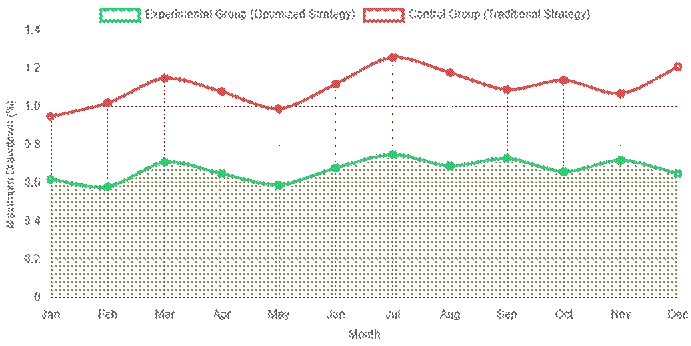
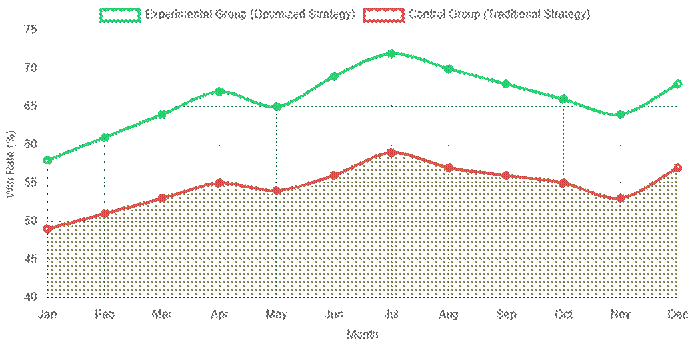
After 12 months of experiments, the investment performance and user satisfaction of the two groups of investors are counted, and the results are shown in Table 1 and Table 2 respectively.
Table 1 Comparison of Investment Performance between the Experimental Group and the Control Group
| Indicator | Experimental Group | Control Group | Difference (Experimental Group – Control Group) |
| Average Return Rate (%) | 8.62 | 6.35 | 2.27 |
| Maximum Drawdown (%) | 7.83 | 11.26 | -3.43 |
| Win Rate (%) | 68.5 | 57.3 | 11.2 |
| Average Holding Time (Months) | 7.2 | 4.8 | 2.4 |
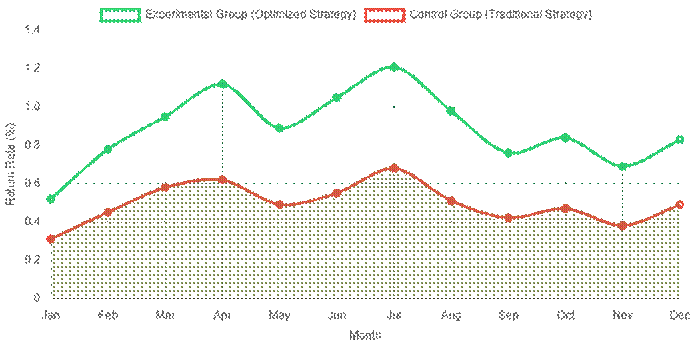
As can be seen from Table 1, the investment performance of the experimental group is significantly better than that of the control group. In terms of average return rate, the average return rate of the experimental group is 8.62%, which is 2.27 percentage points higher than that of the control group (6.35%); in terms of maximum drawdown, the maximum drawdown of the experimental group is 7.83%, which is 3.43 percentage points lower than that of the control group (11.26%), indicating that the optimized strategy has better risk control ability; in terms of win rate, the win rate of the experimental group is 68.5%, which is 11.2 percentage points higher than that of the control group (57.3%); in terms of average holding time, the average holding time of the experimental group is 7.2 months, which is 2.4 months longer than that of the control group (4.8 months), indicating that the optimized strategy can better guide investors to hold for a long time and avoid irrational decisions caused by loss aversion.
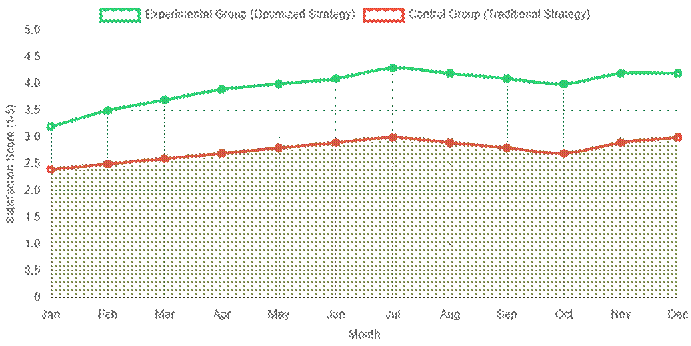
Table 2 Comparison of User Satisfaction between the Experimental Group and the Control Group
| Indicator | Experimental Group (Average Score) | Control Group (Average Score) | Difference (Experimental Group – Control Group) |
| Satisfaction with Investment Strategy | 4.2 | 3.1 | 1.1 |
| Satisfaction with Risk Control Mechanism | 4.3 | 2.9 | 1.4 |
| Satisfaction with Investor Education | 4.1 | 2.5 | 1.6 |
| Overall Satisfaction | 4.2 | 3.0 | 1.2 |
As can be seen from Table 2, the user satisfaction of the experimental group is significantly higher than that of the control group. In terms of satisfaction with the investment strategy, the average score of the experimental group is 4.2, which is 1.1 points higher than that of the control group (3.1); in terms of satisfaction with the risk control mechanism, the average score of the experimental group is 4.3, which is 1.4 points higher than that of the control group (2.9); in terms of satisfaction with investor education, the average score of the experimental group is 4.1, which is 1.6 points higher than that of the control group (2.5); in terms of overall satisfaction, the average score of the experimental group is 4.2, which is 1.2 points higher than that of the control group (3.0). This shows that the optimized intelligent investment consultant strategy is more in line with the actual needs of investors, can better meet the psychological needs of investors under the influence of loss aversion, and improve the user’s trust and satisfaction with the strategy.
In addition, through the analysis of the experimental data, it is found that the optimized strategy has a more obvious effect on novice investors. The average return rate of novice investors in the experimental group is 7.85%, which is 2.53 percentage points higher than that of novice investors in the control group (5.32%); the maximum drawdown is 8.12%, which is 3.76 percentage points lower than that of the control group (11.88%). This is because novice investors have a higher degree of loss aversion and are more likely to make irrational decisions, while the optimized strategy can better guide novice investors to restrain loss aversion and make rational decisions. For experienced investors, the optimized strategy also has a certain effect, but the effect is not as obvious as that of novice investors, because experienced investors have a certain ability to restrain loss aversion.
This paper studies the strategy optimization of intelligent investment consultants from the perspective of loss aversion, and draws the following conclusions: First, loss aversion is a universal behavioral bias of investors, which has a significant impact on investors’ decision-making, leading to investors making irrational decisions such as blind stop-loss and holding losses, and affecting the effectiveness of intelligent investment consultant strategies. Second, the traditional intelligent investment consultant strategy has obvious defects in dealing with loss aversion, such as inaccurate risk assessment, inhumanized asset allocation, rigid risk control mechanism and insufficient investor education, which cannot adapt to the behavioral characteristics of investors. Third, the intelligent investment consultant strategy optimized from the perspective of loss aversion, including optimizing investor portrait construction, asset allocation strategy, risk control mechanism and strengthening investor education, can better adapt to the behavioral characteristics of investors, reduce the negative impact of loss aversion, improve the investment performance and user satisfaction of investors. Fourth, the optimized strategy has a more obvious effect on novice investors, which can help novice investors better restrain loss aversion and improve their rational decision-making ability.
Based on the above research conclusions, this paper puts forward the following suggestions for the practice and development of intelligent investment consultants:
First, strengthen the research and application of behavioral finance theory. Intelligent investment consultant institutions should pay more attention to the research of behavioral finance theory, especially the impact of loss aversion and other behavioral biases on investors’ decision-making, and integrate behavioral finance theory into the strategy design of intelligent investment consultants. At the same time, strengthen the research and development of related technologies, such as big data and artificial intelligence, to improve the ability of collecting and analyzing investors’ behavioral data, and accurately evaluate the loss aversion degree of investors.
Second, improve the personalized level of intelligent investment consultant services. According to the loss aversion degree and other behavioral characteristics of different investors, provide personalized investment strategies and services. For investors with high loss aversion, focus on loss control and provide stable investment portfolios; for investors with low loss aversion, focus on return improvement and provide investment portfolios with higher risk and return. At the same time, establish a dynamic service mechanism to adjust the investment strategy in real time according to the changes of investors’ behavioral characteristics and market environment.
Third, optimize the risk control mechanism of intelligent investment consultants. Break the rigid stop-loss and take-profit mode, design a flexible risk control mechanism based on the loss aversion degree of investors, introduce the loss buffer mechanism and risk early warning mechanism, guide investors to make rational decisions, and reduce the negative impact of loss aversion. At the same time, strengthen the monitoring of market risks and the operation status of investment portfolios, and timely adjust the risk control strategy to ensure the safety of investors’ assets.
Fourth, strengthen investor education and improve investors’ rational decision-making ability. Establish a perfect investor education system, carry out targeted education on loss aversion and other behavioral biases, help investors correctly understand the nature of investment risks and their own behavioral biases, and master the methods of restraining irrational behaviors. At the same time, provide simulation investment training and communication platforms to improve investors’ investment experience and rational decision-making ability.
Fifth, strengthen industry supervision and standardize the development of the intelligent investment consultant industry. Relevant regulatory authorities should strengthen the supervision of the intelligent investment consultant industry, formulate relevant industry standards and regulatory policies, standardize the behavior of intelligent investment consultant institutions, and protect the legitimate rights and interests of investors. At the same time, guide intelligent investment consultant institutions to focus on the improvement of service quality, and promote the healthy and sustainable development of the industry.
7. Research Limitations and Future Research Directions
This paper has certain limitations in the research process. First, the sample size of the empirical analysis is relatively small, only 200 investors are selected as the research objects, and the experiment period is only 12 months, which may affect the universality and accuracy of the research results. Second, the evaluation index of loss aversion is relatively simple, only a few indexes are selected to evaluate the loss aversion degree of investors, and the evaluation system needs to be further improved. Third, the optimized intelligent investment consultant strategy proposed in this paper is mainly aimed at the general investors, and there is no targeted optimization for specific types of investors (such as elderly investors, young investors, etc.).
In the future, the research can be carried out from the following aspects: first, expand the sample size of empirical analysis, extend the experiment period, and improve the universality and accuracy of the research results; second, improve the evaluation index system of loss aversion, introduce more comprehensive and scientific evaluation indexes, and accurately measure the loss aversion degree of investors; third, carry out targeted research on specific types of investors, and optimize the intelligent investment consultant strategy according to the characteristics of different types of investors; fourth, combine with emerging technologies such as blockchain and metaverse, explore new forms and new strategies of intelligent investment consultants, and promote the innovation and development of the intelligent investment consultant industry.
Reference
[1]Gao W ,Ju M ,Landue S . Robo-advisors of young enterprises vs. robo-advisors of established investment companies: evidence from well-known robo-advisors[J].Eurasian Business Review,2026, (prepublish):1-32.
[2]Arshi T ,Pandey L ,Virmani N , et al. Unveiling the key enablers of robo advisor using fuzzy-AHP approach: A decision-making framework[J].Journal of Open Innovation: Technology, Market, and Complexity,2026,12 (2):100772-100772.
[3]Byun J S ,Jang S ,Choi Y J . Can we trust artificial intelligence with asset management? A consumer preference analysis of robo-advisor services[J].Electronic Commerce Research and Applications,2026,77 101599-101599.
[4]Lee C J ,Jiang S ,Tang Y . Examining the impacts of artificial intelligence characteristics on user resistance to financial robo-advisors[J].Information Technology & People,2026,39 (3):1117-1153.
[5]Ooi K S ,Yeap A J ,Chin W P , et al. Two-wave time-lagged analysis of continuance usage in robo-advisory services: a sequential mediation approach[J].Marketing Intelligence & Planning,2026,44 (3):630-647.
[6]Santini O D F ,Jafar H S ,Ladeira J W , et al. Drivers of robo-advisors adoption in financial services: a meta-analytical study[J].International Journal of Bank Marketing,2026,44 (3):439-453.
[7]Cao X ,Zwaan D L ,Wong V . Building trust in robo-advisory: technology, firm-specific and system trust[J].Qualitative Research in Financial Markets,2026,18 (2):408-428.
[8] BharathCloud Appoints JLL as Advisory Partner for Sovereign Cloud Investment in India[J].Telecomworldwire,2026,
[9] SEC Proposes Amendments to the Small Entity Definitions for Investment Companies and Investment Advisers for Purposes of the Regulatory Flexibility Act[J].M2 Presswire,2026,
[10]Li Q ,Huang J ,Tan Y , et al. Trust-Building Strategies of Fundraising Consultants in Chinese Medical Crowdfunding Platforms: Qualitative Study.[J].Journal of medical Internet research,2025,27 e80299.
[11] Orion Expands Advisor Access to Clark Capital’s Navigator Total Wealth Strategies on the Orion Portfolio Solutions Platform[J].Manufacturing Close – Up,2024,
[12] Orion Expands Advisor Access to Clark Capital’s Navigator Total Wealth Strategies on the Orion Portfolio Solutions Platform[J].Wireless News,2024,
[13]Junrong L ,Zhiping C ,Qihong D . Automation of the Individualized Investing Strategy for an Investment Advisor Established by a Semi-Markov Regime-Switching Model[J].Computational Economics,2023,63 (6):2351-2370.
[14] YCharts; Financial Advisors Divided on Third-Party Investment Strategies, COVID-19 Prompts Reflection on Overseeing Client Assets[J].Medical Letter on the CDC & FDA,2020, 1081-.
[15]Zuccollo D ,Osher J . Financial advisers’ top Section 12J investment strategies[J].MoneyMarketing,2020,2020 (1):24-24.